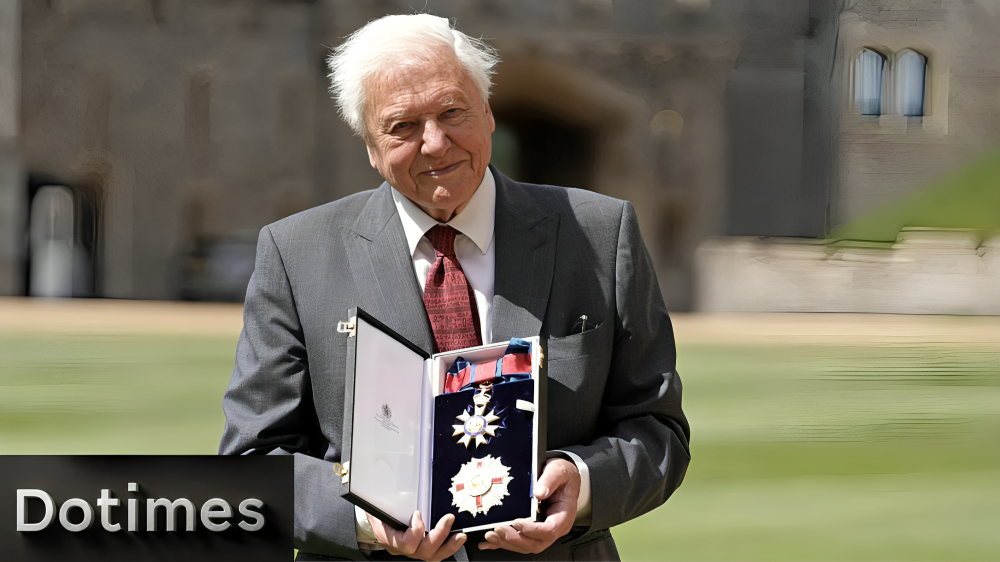

Well, if you’ve ever typed the name Robert Attenborough into a search bar, chances are you were expecting to read about someone standing in a rainforest with a camera crew. But here’s the thing — Robert Attenborough is no ordinary celebrity’s son coasting on family fame. He’s a serious, deeply respected academic who has spent decades contributing to the world of bioanthropology in ways that genuinely matter. While his father, the legendary Sir David Attenborough, has brought nature to our television screens for over seventy years, Robert carved out his own path in the halls of academia — quietly, humbly, and brilliantly.
In this article, we’ll take a long and thoughtful look at the life, career, research, and legacy of Robert Attenborough — a man who proves, beyond any doubt, that meaningful contributions to human knowledge don’t always come wrapped in a BBC documentary.
Who Is Robert Attenborough? An Introduction to the Man Behind the Name
Robert Attenborough is the son of Sir David Attenborough, one of the most celebrated naturalists and broadcasters in the history of television. Born to David and his wife Jane Elizabeth Ebsworth Oriel — who married in 1950 — Robert grew up in a household that was practically buzzing with intellectual energy. His younger sister, Susan Attenborough, went on to become a primary school headmistress. Robert, on the other hand, felt the pull of scientific research and devoted himself entirely to academia.
Unlike his globally famous father, Robert built his identity within the world of universities, research papers, and fieldwork. He’s not a public figure by any conventional measure. You won’t find him hosting wildlife documentaries or giving speeches at international climate conferences. What you will find, if you look carefully enough, is a scholar whose work in human population biology and bioanthropology has left a real and lasting mark on his field.
The Attenborough Family: A Legacy of Curiosity and Learning
It’s hard to talk about Robert Attenborough without first understanding the remarkable family he came from. The Attenborough household, as Robert grew up, was one shaped by deep intellectual curiosity. His father David was, during Robert’s formative years, actively building what would become one of the most extraordinary broadcasting careers in history. His mother Jane was a teacher — a warm, grounding presence who played a central role in raising both Robert and Susan.
Sadly, Jane passed away in 1997 after suffering a brain hemorrhage. David Attenborough has since described her as the “anchor” of his life, and her loss was deeply felt by the entire family. Despite this heartbreak, the Attenborough family remained grounded in shared values of knowledge, science, and purposeful living.
Robert’s uncle, Richard Attenborough, was a celebrated actor, director, and producer — adding yet another dimension of creativity and accomplishment to the family tree. Growing up in that kind of environment, it’s really no surprise that both Robert and Susan chose intellectual and educational careers of their own. Different tools, identical dedication — that’s a phrase that perfectly captures what the Attenborough siblings inherited from their parents.
Robert Attenborough’s Academic Journey and Educational Background
Robert Attenborough pursued his education with genuine passion and a clear sense of direction. He chose to study fields that sit at the exciting crossroads of biology, evolution, and human culture — namely bioanthropology and archaeology. His academic journey took him through some of the most prestigious institutions in the English-speaking world.
He developed strong ties with the Department of Archaeology at the University of Cambridge in the United Kingdom, where he is listed as a Senior Fellow at the McDonald Institute for Archaeological Research. His areas of expertise, as noted by the Cambridge Department of Archaeology, include:
- Human Population Biology and Health
- Human Evolutionary and Behavioural Ecology
- Biological Anthropology
These are not light or casual topics. They require years of rigorous study, an ability to synthesise data from multiple scientific disciplines, and a genuine passion for understanding how human beings have evolved and adapted over centuries. Robert Attenborough clearly possesses all of these qualities in abundance.
A Career Dedicated to Bioanthropology at Australian National University
One of the defining chapters of Robert Attenborough’s professional life was his role as a senior lecturer in bioanthropology at the Australian National University (ANU) in Canberra, Australia. This is not just a prestigious institution — it is one of the top-ranked universities in the entire Asia-Pacific region, and working there as a senior lecturer is no small achievement.
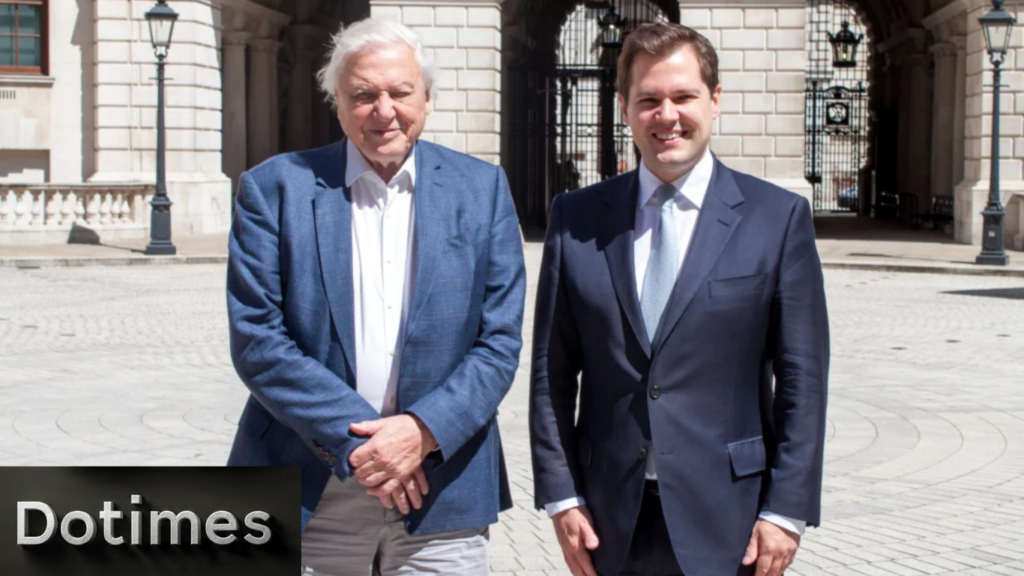
At ANU, Robert focused his research on human population biology and health, with a particular emphasis on communities in New Guinea. His work explored the complex relationships between biology, culture, and evolution — and how those forces combine to shape the health of human populations over generations. This is precisely the kind of research that rarely makes headlines but absolutely underpins our broader understanding of human biology and health.
To put it plainly: Robert Attenborough’s work at ANU helped fill in critical gaps in our scientific knowledge about how real human communities — in some of the world’s most remote and ecologically distinct environments — survive, adapt, and change over time.
Research in New Guinea: Fieldwork at the Edge of the World
If you want to understand what makes Robert Attenborough’s research truly special, you have to talk about New Guinea. His fieldwork in this region — one of the most biologically and culturally diverse places on Earth — is central to his academic legacy.
New Guinea, shared between Papua New Guinea and Indonesia, is home to hundreds of distinct indigenous communities, many of which have lived in relative isolation for thousands of years. Studying the human populations of this region offers scientists an extraordinary window into:
- How human populations respond to specific environmental pressures
- The relationship between diet, genetics, and long-term health outcomes
- How evolutionary history continues to influence modern human biology
- The ways in which cultural practices interact with biological traits across generations
Robert’s research in this region was meticulous and grounded in genuine respect for the communities he studied. His work bridges the gap between evolutionary science and behavioural anthropology in ways that genuinely advance both fields.
Robert Attenborough’s Key Research Areas: A Closer Look
To appreciate the full scope of Robert Attenborough’s academic contributions, it helps to understand the specific research areas he has dedicated his career to. The table below offers a clear overview:
| Research Area | Description | Key Region of Study |
| Human Population Biology | Studies how biological traits vary across human populations | New Guinea, Pacific Region |
| Human Evolutionary Ecology | Examines how evolutionary pressures shape human behaviour and health | Global, with Oceania focus |
| Bioanthropology | Combines biology and anthropology to understand human variation | New Guinea, Cambridge |
| Behavioural Anthropology | Explores how behaviour is shaped by evolutionary history | Pacific Islands |
| Human Health and Demography | Studies population-level health patterns and their biological roots | Papua New Guinea |
Each of these areas requires deep expertise, strong analytical skills, and an ability to connect large-scale evolutionary theory with the on-the-ground reality of specific human communities. Robert Attenborough has demonstrated mastery of all of them throughout his career.
The Robert and David Attenborough Dynamic: Different Platforms, Same Passion
Sir David Attenborough explored the world’s ecosystems through the lens of a television camera and a gifted narrator’s voice. Robert Attenborough explored humanity’s own biological history through the lens of academic research, fieldwork, and peer-reviewed scholarship.
The difference between them is platform, not passion. Both men have dedicated their professional lives to understanding the natural world — one through storytelling that reached billions of viewers, the other through research that reached the scientific community. Robert never chased cameras, but he absolutely chased knowledge. And that, when you think about it, is a deeply admirable choice.
David Attenborough has spoken with warmth about both his children, consistently protecting their privacy even as his own life has unfolded in the global spotlight. There’s clearly a strong father-son bond built on mutual intellectual respect.
Robert Attenborough’s Ties to Cambridge: A Prestigious Academic Home
Beyond his work at ANU, Robert Attenborough has maintained significant ties to the University of Cambridge in the United Kingdom. He holds the position of Senior Fellow at the McDonald Institute for Archaeological Research, which is one of the foremost centres for archaeological and anthropological research in the world.
His connection to Cambridge is particularly meaningful because it places him within one of the richest intellectual traditions in academic history. The Department of Archaeology at Cambridge has produced world-class research across a remarkably broad range of disciplines, and Robert’s work fits naturally within that tradition of rigorous, curiosity-driven scholarship.
His research focus areas, as listed on the Cambridge Department of Archaeology’s official directory, include:
- Human Population Biology and Health — especially in New Guinea
- Evolutionary and Behavioural Anthropology
- Biological Anthropology as a formal subject discipline
The geographical focus on Oceania and the Pacific distinguishes his work within a broader field that often leans heavily toward European or African case studies. That’s yet another reason why Robert Attenborough’s contributions are genuinely valuable — he’s studying regions and populations that are sometimes overlooked by mainstream academic research.
Privacy, Profile, and the Choice to Live Outside the Spotlight
Let’s be real — most people who share a surname with one of the world’s most famous naturalists would be tempted to lean into that association. Robert Attenborough has done precisely the opposite. He has, throughout his career, maintained a distinctly private profile, keeping his personal life largely out of the media and choosing to let his academic work speak for itself.
This is, in its own way, a rather admirable choice. In an age when so much value is placed on public visibility, social media presence, and personal branding, Robert Attenborough’s commitment to quiet, purposeful scholarship is genuinely refreshing. He has shown that it’s perfectly possible — and perhaps even preferable — to live a life of deep meaning and lasting contribution entirely outside the public eye.
His choice of privacy has, naturally, led to curiosity and some degree of speculation. People want to know his age, his personal details, his opinions. The available verified information, however, focuses on what truly matters: his professional accomplishments, his research contributions, and his place within the remarkable Attenborough family legacy.
What Robert Attenborough’s Life Teaches Us About Legacy and Purpose
There’s a broader lesson embedded in the story of Robert Attenborough, and it’s one worth sitting with for a moment. In a world that celebrates celebrity, fame, and viral moments, Robert’s life offers a quietly powerful counter-argument. They just aren’t flashy.
That’s not a limitation. That’s a choice. And it’s a choice that reflects a kind of intellectual integrity that’s genuinely worth celebrating.
The Attenborough family, as a whole, has given the world an extraordinary gift — a commitment to understanding the natural world and humanity’s place within it. Sir David did it through television. Robert did it through research. Susan did it through education.
Conclusion
When all is said and done, Robert Attenborough is a fascinating and deeply admirable figure — not because of his famous surname, but because of the genuine contributions he has made to human knowledge entirely on his own terms.
FAQs
Who is Robert Attenborough?
Robert Attenborough is the son of renowned British naturalist and broadcaster Sir David Attenborough. He is a respected academic and bioanthropologist who served as a senior lecturer at the Australian National University in Canberra, and holds a fellowship at the McDonald Institute for Archaeological Research at the University of Cambridge.
What does Robert Attenborough do for a living?
Robert Attenborough is a bioanthropologist and academic researcher.
Did Robert Attenborough follow in his father’s footsteps?
Not in a conventional sense. While Sir David Attenborough became one of the world’s most famous naturalists and broadcasters, Robert chose academia over television. However, both men share a deep passion for understanding the natural and human world — just through very different platforms.
Where did Robert Attenborough work?
Robert Attenborough worked as a senior lecturer in bioanthropology at the Australian National University (ANU) in Canberra, Australia.