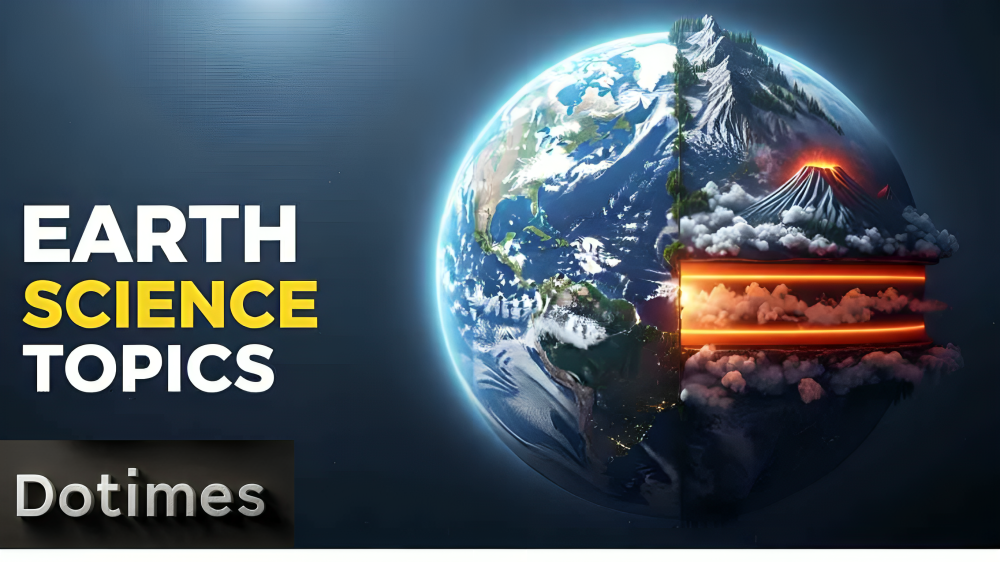

Well, here’s the thing — we’re living on a planet that is constantly moving, changing, and evolving in ways that most people never stop to notice. Earth science topics sit right at the heart of understanding everything around us: the ground we walk on, the air we breathe, the oceans that cover more than 70% of our world, and the sky that stretches endlessly above our heads. Isn’t that something worth knowing about?
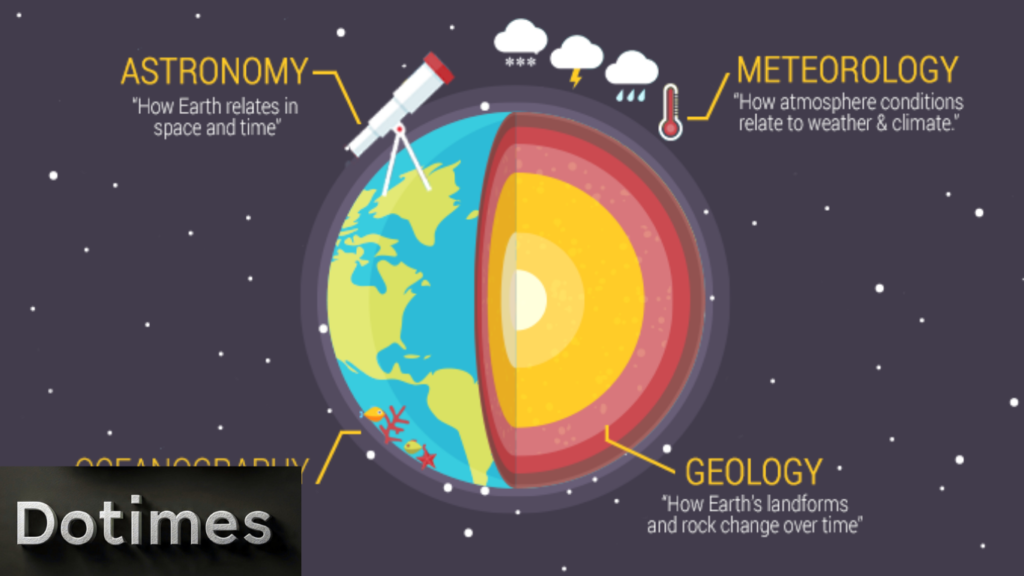
Earth science — sometimes called geoscience — is a broad and exciting field that pulls together geology, meteorology, oceanography, astronomy, and environmental science into one magnificent web of knowledge. It’s not just for scientists in white lab coats, either. These topics touch everyday life in ways we often take for granted: why earthquakes happen, how weather patterns form, what causes floods, and even how soil helps grow our food.
In this article, we’re going to dig deep (pun fully intended!) into the most important and fascinating earth science topics. Whether you’re a curious student, an enthusiastic teacher, or simply someone who wants to understand the world better, you’re in the right place. Let’s get started.
The Incredible Structure of the Earth
Before jumping into specific earth science topics, it helps to understand what Earth is actually made of. Think of our planet like a hard-boiled egg — there’s a shell, a white layer, and a yolk at the centre. Earth works in a pretty similar way, with distinct layers that each play a vital role.
The Four Main Layers of Earth:
| Layer | Composition | Thickness |
| Crust | Solid rock (silicate minerals) | 5–70 km |
| Mantle | Semi-solid rock (silicates, magnesium, iron) | ~2,900 km |
| Outer Core | Liquid iron and nickel | ~2,200 km |
| Inner Core | Solid iron and nickel | ~1,220 km radius |
The crust is where all life exists — it’s the thin, rocky skin of the Earth. Beneath it, the mantle behaves like a very slow-moving liquid over millions of years, which drives one of the most dramatic earth science topics of all: plate tectonics.
The outer core is especially important because its swirling liquid iron generates Earth’s magnetic field, which acts like an invisible shield protecting us from harmful solar radiation. Without it, life as we know it simply wouldn’t exist. Now that’s something to appreciate!
Plate Tectonics: Earth’s Moving Puzzle Pieces
If you’ve ever looked at a world map and thought that South America and Africa look like they’d fit together like puzzle pieces — well, you’re absolutely right.
Earth’s crust is broken into large sections called tectonic plates, and these plates are constantly — though very slowly — moving. They float on the semi-molten mantle below, drifting a few centimetres per year. Over millions of years, though, those small movements add up to massive changes in the shape of continents, the formation of mountain ranges, and even the opening and closing of entire ocean basins.
Types of Plate Boundaries:
- Convergent boundaries — where two plates crash into each other, creating mountain ranges (like the Himalayas) or deep ocean trenches
- Divergent boundaries — where plates pull apart, allowing magma to rise and create new crust (like the Mid-Atlantic Ridge)
- Transform boundaries — where plates slide past each other horizontally, often causing earthquakes (like the San Andreas Fault)
Understanding this topic gives us a window into the restless, energetic planet we call home.
Volcanoes and Earthquakes: When the Earth Speaks Up
Oh boy — if plate tectonics is the story, then volcanoes and earthquakes are the dramatic plot twists. These natural events are among the most powerful forces on our planet, and they’re central earth science topics that scientists study intensively every single day.
Volcanoes form when magma (molten rock from the mantle) forces its way through the crust and erupts at the surface. There are different types — shield volcanoes, stratovolcanoes, and cinder cone volcanoes — each with distinct shapes and eruption styles. While they can certainly be destructive, volcanoes also create new land, enrich soil with minerals, and help regulate Earth’s carbon cycle.
Key facts about earthquakes:
- More than one million earthquakes occur on Earth every year
- Most are too small to be felt by people
- The 2004 Indian Ocean earthquake released energy equivalent to 23,000 atomic bombs
- Japan, Indonesia, and Chile are among the most seismically active countries
Studying volcanoes and earthquakes isn’t just academically interesting — it’s literally life-saving. The better we understand these events, the more effectively we can predict them and protect communities.
The Rock Cycle: Earth’s Incredible Recycling System
Here’s a cool idea — Earth never wastes anything. Rocks are constantly being created, broken down, transformed, and rebuilt through a never-ending process called the rock cycle. This is one of those earth science topics that quietly explains so much about the world around us.
There are three main types of rocks, and each one can be transformed into another given the right conditions:
Igneous Rocks Formed when magma or lava cools and solidifies. Examples include granite and basalt. These rocks are essentially Earth’s original building material.
Sedimentary Rocks Formed when layers of sediment (sand, mud, shells, organic matter) are compressed over time. Examples include sandstone, limestone, and shale. Sedimentary rocks often contain fossils, making them incredibly valuable for understanding prehistoric life.
Metamorphic Rocks Formed when existing rocks are subjected to extreme heat and pressure, changing their structure without melting them. Examples include marble (from limestone) and slate (from shale).
The rock cycle links directly to other earth science topics like erosion, weathering, the water cycle, and even mountain formation. It’s a beautiful reminder that our planet is always working — always in motion — even when it seems perfectly still.
The Atmosphere and Weather Systems
Step outside and take a deep breath — you’ve just interacted with one of the most important topics in all of earth science. Earth’s atmosphere is a thin but mighty layer of gases that makes life possible, drives weather patterns, and protects us from the harsh conditions of outer space.
The atmosphere is divided into five main layers:
- Troposphere — where weather happens; extends about 12 km above the surface
- Stratosphere — home of the ozone layer, which absorbs harmful UV radiation
- Mesosphere — where meteors burn up as they enter Earth’s atmosphere
- Thermosphere — where the International Space Station orbits; also where auroras occur
- Exosphere — the outermost layer, gradually merging with outer space
Weather vs. Climate — What’s the Difference?
Loads of people mix these two up, so let’s clear it up. Weather is what happens in the atmosphere in the short term — today’s rain, tomorrow’s sunshine, this week’s cold snap. Climate is the long-term pattern of weather in a particular region, typically measured over 30 years or more.
Understanding weather systems — how air masses move, how pressure differences create wind, how moisture in the air becomes precipitation — is essential knowledge that has practical applications in agriculture, aviation, disaster preparedness, and urban planning.
The Water Cycle: Earth’s Natural Plumbing System
Water is life — full stop. And the water cycle (also called the hydrological cycle) is the continuous journey that water takes through the environment, making it one of the most essential earth science topics there is.
Here’s how it works, step by step:
- Evaporation — Heat from the sun causes water from oceans, lakes, and rivers to transform into water vapour and rise into the atmosphere
- Transpiration — Plants release water vapour through their leaves (combined with evaporation, this is called evapotranspiration)
- Condensation — As water vapour rises and cools, it condenses into tiny droplets, forming clouds
- Precipitation — Water falls back to Earth as rain, snow, sleet, or hail
- Runoff and Infiltration — Water flows over land into rivers and streams, or soaks into the ground to become groundwater
- Collection — Water gathers in oceans, lakes, rivers, and underground aquifers, and the cycle begins again
The water cycle is deeply connected to climate, agriculture, ecosystems, and human survival. Disruptions to this cycle — caused by climate change, deforestation, or over-extraction of groundwater — have real and serious consequences for people and nature alike.
Oceanography: Exploring the Deep Blue
The oceans are, without question, the most mysterious places on Earth. More than 80% of our oceans remain unexplored, which means we know more about the surface of Mars than we do about our own ocean floors. That’s mind-blowing, isn’t it?
Oceanography is the branch of earth science dedicated to studying the oceans — their physical properties, chemistry, biology, and geology. It’s one of those earth science topics that’s growing in importance every year, especially as we grapple with climate change and rising sea levels.
Key facts about Earth’s oceans:
- Oceans cover approximately 71% of Earth’s surface
- The average depth of the ocean is about 3,688 metres
- The deepest point is the Challenger Deep in the Mariana Trench at roughly 11,000 metres
- Oceans absorb about 30% of the CO₂ produced by human activities
- Ocean currents act like a global conveyor belt, distributing heat around the planet
Ocean currents are particularly fascinating. The thermohaline circulation — driven by differences in temperature and salinity — connects all of Earth’s oceans in one massive, slow-moving system. This “global ocean conveyor belt” plays a huge role in regulating climate and distributing nutrients throughout the marine environment.
Climate Change and Earth’s Future
Alright, let’s talk about the elephant in the room — climate change. It’s arguably the most urgent of all modern earth science topics, and understanding it starts with understanding how Earth’s climate system naturally works.
Earth has gone through many natural climate cycles over millions of years — ice ages, warm periods, dramatic swings in sea level and atmospheric composition. These natural changes are driven by factors like variations in Earth’s orbit (called Milankovitch cycles), volcanic eruptions, and changes in solar output.
What’s happening today, however, is different in one crucial way: the speed. Human activities — particularly the burning of fossil fuels, deforestation, and industrial agriculture — are releasing enormous quantities of greenhouse gases (mainly CO₂ and methane) into the atmosphere. These gases trap heat, causing global average temperatures to rise at an unprecedented rate.
Effects of Climate Change on Earth Systems:
- Melting ice caps and glaciers → rising sea levels
- Warmer oceans → stronger hurricanes and disrupted marine ecosystems
- Shifts in precipitation patterns → more droughts in some regions, more flooding in others
- Permafrost thaw → release of even more greenhouse gases, creating a feedback loop
- Increased wildfire frequency → further deforestation and air quality issues
The good news? Earth science gives us the tools to understand these changes, model future scenarios, and develop meaningful solutions. Renewable energy, carbon capture, sustainable land management, and ocean conservation are all fields where earth science knowledge is leading the way forward.
Soil Science: The Foundation Beneath Our Feet
Here’s something that doesn’t get nearly enough attention — soil. Honestly, soil might just be the most underrated of all earth science topics. It’s literally what we build our civilisations on, grow our food in, and filter our water through.
Soil is not just “dirt.” It’s a complex mixture of minerals, organic matter, water, air, and billions of living organisms. It takes hundreds to thousands of years to form just a few centimetres of healthy topsoil, which is why soil erosion and degradation are such serious environmental concerns.
Soil Layers (Horizons):
| Horizon | Name | Description |
| O | Organic Layer | Decomposing leaves and organic matter |
| A | Topsoil | Rich in nutrients and organisms; where plants root |
| B | Subsoil | Accumulates minerals leached from above |
| C | Parent Material | Partially weathered rock |
| R | Bedrock | Solid unweathered rock |
Good soil health supports biodiversity, carbon storage, clean water, and food production. Earth scientists who specialise in soil — called pedologists — play a vital role in sustainable agriculture, land restoration, and climate resilience.
Earth’s Natural Resources and Sustainability
One more earth science topic that deserves a spotlight is natural resources — the materials and energy sources that Earth provides and that human civilisation depends upon. These include minerals, fossil fuels, freshwater, forests, and fertile soil.
Non-renewable resources (formed over millions of years): coal, oil, natural gas, minerals like iron and copper
Renewable resources (naturally replenished): solar energy, wind energy, water, timber (with responsible management)
Earth scientists work at the forefront of efforts to locate new mineral deposits, assess groundwater availability, and evaluate the environmental impact of resource extraction. They also help design reclamation projects that restore land after mining — bringing life back to places that industry has left behind.
The challenge of our era is transitioning from a resource-extraction economy to a circular, sustainable one — and earth science topics provide the foundational knowledge that makes that transition possible.
Conclusion
From the fiery depths of the inner core to the whispering edges of the exosphere, earth science topics offer a remarkable window into the workings of our incredible planet. We’ve covered plate tectonics, volcanoes, the rock cycle, weather systems, the water cycle, oceanography, climate change, soil science, and natural resources — and honestly, we’ve only scratched the surface.
The beauty of earth science is that it’s never finished. Whether you’re standing on a beach watching waves roll in, feeling the ground shake in an earthquake, or simply marvelling at a colourful sunset, you’re witnessing earth science in action.
Understanding these earth science topics doesn’t just make you smarter — it makes you a better inhabitant of this magnificent planet. It builds appreciation, encourages stewardship, and inspires action. And in a world that needs both knowledge and care, that’s the most valuable thing of all. Keep exploring, keep questioning, and never stop looking at the world with wonder. After all, this planet is our home — and it’s well worth understanding.
FAQs
What are the main branches of earth science topics?
Earth science is broadly divided into four main branches: geology (the study of Earth’s solid structures), meteorology (the study of the atmosphere and weather), oceanography (the study of oceans), and astronomy (the study of Earth in the context of space). Many sub-disciplines — like seismology, climatology, and pedology — fall under these broader categories.
Why are earth science topics important for students to learn?
Understanding earth science topics helps students make sense of natural events like earthquakes, floods, and climate shifts. It also builds critical thinking skills and prepares young people for careers in environmental science, engineering, geology, resource management, and many other fields that are vital to society’s future.
How does plate tectonics connect to other earth science topics?
Plate tectonics is like the backbone of many other earth science topics. It drives volcanic activity, causes earthquakes, shapes mountain ranges, influences ocean basin formation, and even affects climate patterns by shifting the positions of continents over geological time. It’s truly one of the most interconnected concepts in all of earth science.
What is the difference between weather and climate in earth science?
Weather refers to short-term atmospheric conditions — like today’s rain or tomorrow’s sunshine — while climate refers to the long-term average patterns of weather in a region, typically calculated over 30 years. Both are key earth science topics, but they operate on very different time scales and require different tools and methods to study.
How can learning about earth science topics help with climate change?
Earth science gives us the data, models, and frameworks to understand how and why Earth’s climate is changing, what the consequences are likely to be, and what interventions might slow or reverse those changes. From measuring greenhouse gases in ice cores to tracking sea level rise with satellites, earth science tools are at the centre of every meaningful conversation about climate change and environmental sustainability.