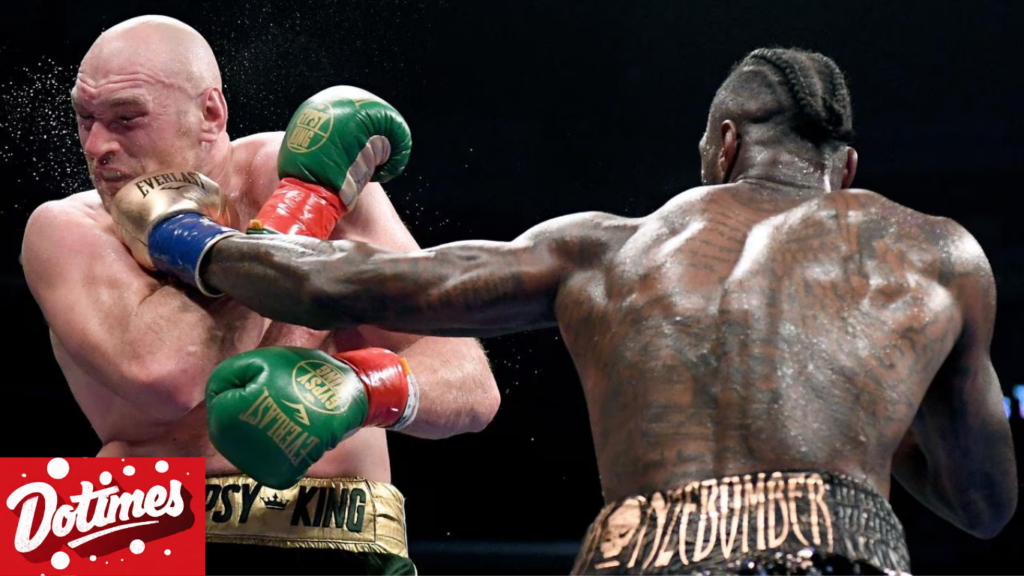

When it comes to modern boxing, few events have captured the world’s imagination quite like Deontay Wilder vs Tyson Fury 2. Well, folks, this wasn’t just a fight — it was a statement. It was the kind of night that reminded every boxing fan why they fell in love with the sweet science in the first place. Two behemoths of the heavyweight division, carrying unfinished business from one of the most dramatic draws in recent memory, finally came face to face again under the blinding lights of Las Vegas. And what followed was nothing short of extraordinary.
The rematch took place on February 22, 2020, at the iconic MGM Grand Garden Arena in Las Vegas, Nevada. After their first meeting in December 2018 ended in a controversial split draw — a bout that saw Fury rise from a devastating 12th-round knockdown in near-miraculous fashion — the world was buzzing with anticipation for round two. Who would prevail? Would Wilder’s fearsome punching power prove too much? Or would Fury’s boxing genius find a way to dismantle the “Bronze Bomber” once and for all? The answer, as it turned out, was emphatic and breathtaking.
The Road to the Rematch: Unfinished Business
No two ways about it — the first fight left everyone hungry for more. In that December 2018 bout, Tyson Fury survived a pair of hellacious knockdowns, including one in Round 12, and appeared to outclass WBC champion Deontay Wilder before settling for a split draw in front of 17,698 fans at the Staples Center in Los Angeles. It was the kind of finish that left a sour taste in everyone’s mouth, and both camps knew there was only one way to settle things — a rematch.
Since the draw, Wilder (42–0–1, 41 KOs) scored a pair of knockouts against Dominic Breazeale and Luis Ortiz in 2019, while Fury (29–0–1, 20 KOs) dominated Tom Schwarz with a second-round TKO in June before fighting Otto Wallin in September, battling through a nasty gash above his eye to get a unanimous decision win.
Both men were clearly on different journeys of preparation. Fury, notably, had transformed his entire approach to training, working with renowned strength and conditioning coaches, and coming into the rematch with a clear tactical blueprint. The question of what Fury was really capable of — without the ring rust of a multi-year hiatus — was about to be answered definitively.
The Pre-Fight Atmosphere: Electric, Theatrical, Unforgettable
Well, if the first fight had drama, the build-up to Deontay Wilder vs Tyson Fury 2 was pure theatre. The press conferences, the trash talk, the bravado — everything was cranked up to eleven. Fury famously declared he would “stop Wilder inside the first three rounds,” a bold prediction that raised eyebrows across the boxing world. Wilder, for his part, remained supremely confident, insisting his right hand was all he needed to flatten the Gypsy King.
Vegas predicted Wilder — the WBC heavyweight champion — would win Saturday’s highly anticipated rematch. The pre-fight odds had Wilder at -125 and Fury at +105. Most pundits sided with Wilder, believing his power was simply too dangerous for even the cleverest of boxers to avoid indefinitely. But a handful of sharp observers noticed something different about Fury this time — a new fire, a burning intensity that suggested he was coming to take what he believed was rightfully his.
The Spectacular Ring Walks: Kings and Warriors
One of the aspects that made Deontay Wilder vs Tyson Fury 2 such a spectacle was the extraordinary ring walk productions. Both fighters understood the assignment, and boy, did they deliver.
Fury, wearing a crown and with a royal cape draped over his robe, sat on a throne, which was guided to the ring by a group of women in armor. As if that weren’t enough, Fury engaged in a bit of lip-synching to Patsy Cline’s classic ballad “Crazy,” sending a pointed message about his self-belief and showmanship.
For Wilder, it was business of a spectacular kind. Wearing one of his trademark masks, he was draped head to toe in black armor for his walk, celebrating Black History Month with a breathtaking costume that had the crowd roaring.
The irony, however, was that Wilder’s spectacular armor would later become a talking point for entirely different reasons. But more on that shortly. Suffice it to say, by the time the first bell rang, the atmosphere inside the MGM Grand was absolutely electric — a boxing crowd in full roar, ready to witness history.
Round-by-Round Breakdown: A Masterclass in Destruction
The fight itself was a completely different animal from the first bout. This wasn’t close. This wasn’t a chess match. This was Tyson Fury putting on a masterclass that shocked even his most ardent supporters. Here’s how it unfolded:
- Round 1: Fury went straight to the middle of the ring and started throwing. He came back with a right and popped Wilder with a jab, pressing the action as he promised he would.
- Round 2: The pace was fast, with both men landing hard rights. But Fury’s jab was beginning to have a visible and meaningful impact, pushing Wilder back and controlling the tempo.
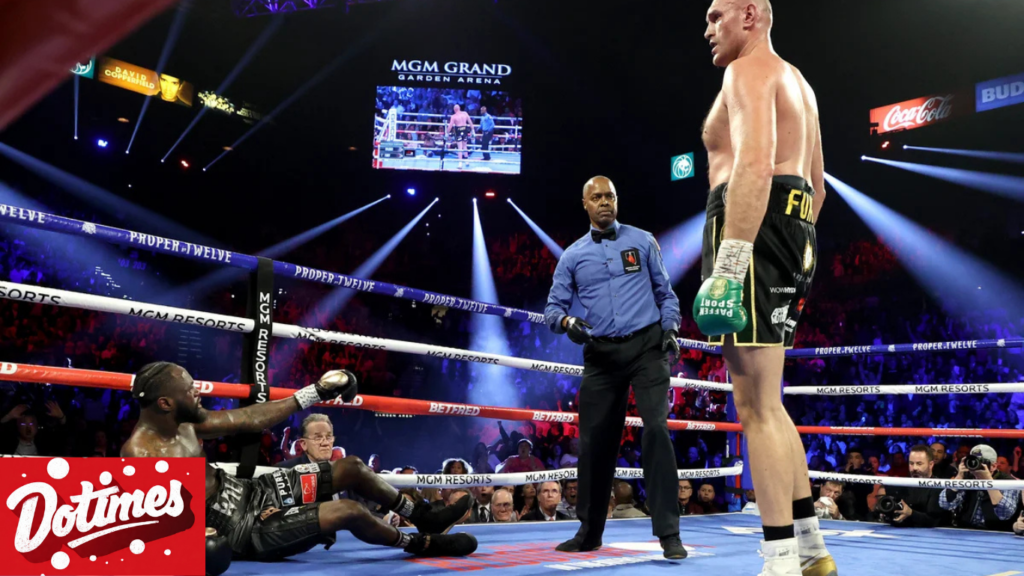
- Round 3: Fury was jabbing effectively and controlling the fight by keeping Wilder away. Fury landed a flush right and Wilder went down with 30 seconds left in the round. Wilder was in trouble. He got up and was unsteady, but Fury couldn’t finish him.
- Round 4: The fourth round was all Fury. Wilder did not seem to be fully recovered and Fury was battering him around the ring, using his jab a lot but mixing in plenty of right hands. Wilder looked very unsteady but survived.
- Round 5: Wilder was in big trouble, staggering around the ring. Fury dropped him with a body shot and he was in trouble when he got up, with no legs under him.
- Round 6: The pace eased slightly, but Fury was doing all the landing. Wilder’s recovery was non-existent and he had no meaningful answers to anything Fury was throwing.
- Round 7: Wilder’s corner threw in the towel at 1:39 as a weary Wilder was battered from pillar to post, bringing the fight to a dramatic and conclusive end.
The Punch Stats: Fury’s Dominance by the Numbers
The numbers from Deontay Wilder vs Tyson Fury 2 told a story just as compelling as the visual evidence. This wasn’t a close fight by any metric.
| Statistic | Tyson Fury | Deontay Wilder |
| Total Punches Thrown | 267 | 141 |
| Total Punches Landed | 82 | 34 |
| Landing Percentage | 30% | 24% |
| Power Punches Landed | 58 | 25 |
| Knockdowns Scored | 2 | 0 |
Fury outlanded Wilder 82-34 in total punches and out-threw the Alabama native 267-141, according to CompuBox. Fury landed at a 30% clip while Wilder landed 24%, and Fury landed 58 power punches in less than seven rounds of action after landing just 38 in the first meeting.
These numbers paint the picture of an utterly one-sided contest. The transformation in Fury’s punching output from the first to the second fight was remarkable and a testament to his meticulous preparation.
Wilder’s Controversial Excuses: The Costume Controversy
In the aftermath of Deontay Wilder vs Tyson Fury 2, things got, well, a little unusual in the Wilder camp. Rather than straightforwardly accepting a comprehensive defeat, Wilder pointed the finger at — of all things — his ring walk costume.
Wilder claimed the outfit — a tribute to Black History Month — weighed him down and that his legs weren’t right by the time the fight started. He said the entire getup, including a mask, weighed about 20 kilograms (roughly 40 pounds), and that he knew by the end of the second round that his legs were gone.
Incredibly, the 34-year-old claimed that he hadn’t been hurt by Fury’s punches, despite being knocked down in the third and fifth rounds and being dominated throughout by the classy Brit until the towel came in. “He didn’t hurt me at all, but the simple fact is… that my uniform was way too heavy for me,” Wilder said.
Wilder also pointed blame at his assistant trainer, Mark Breland, for throwing in the towel, suggesting it went against prior instructions. “We had many discussions for years about this situation and for him to still do it after Jay (Deas, Wilder’s main trainer) told him not to do it really hurt me,” Wilder said.
Most boxing analysts and fans found these explanations difficult to swallow. Fury had simply been better in every single department, and the stats bore that out without a shadow of a doubt.
Fury’s Transformation: From Defensive Genius to Punching Machine
Here’s where things get genuinely fascinating. Tyson Fury had always been renowned as a masterful defensive boxer — a man who could make elite opponents look ordinary through footwork, feints, and ring generalship. But in Deontay Wilder vs Tyson Fury 2, something different emerged.
In one-sided and brutal fashion, the defensive boxing Fury transformed into the puncher, scoring a pair of knockdowns before finishing Deontay Wilder. Unable to complete one of the greatest comeback stories in sports history when he settled for a disputed draw in their first meeting, Fury made the bold claim he would take the fight out of the judges’ hands — and he delivered.
This transformation was arguably the most astonishing element of the night. Fury had clearly identified that Wilder, while possessing one of the most dangerous right hands in boxing history, was vulnerable to high-volume, pressure-based attacking. By walking Wilder down, using his physical size advantage, and throwing far more punches than in the first fight, Fury exposed every weakness in Wilder’s game.
Key tactical adjustments Fury made for the rematch included:
- Increased punch volume — Fury threw nearly twice as many punches as in the first fight, keeping Wilder perpetually under pressure and unable to find space to load up.
- Aggressive early pressure — Unlike the first encounter, Fury came out with an intent to impose himself from the opening bell, not allowing Wilder to settle.
- Body shot integration — The fifth-round body shot knockdown was a direct result of Fury’s broadened attack, targeting the body to bring Wilder’s guard down.
- Physical bullying — Fury used his considerable size and strength to lean on Wilder, sap his energy, and wear him down over the rounds.
- Jab control — The jab was arguably Fury’s most important weapon, disrupting Wilder’s rhythm and preventing him from ever getting comfortable.
The Legacy of Deontay Wilder vs Tyson Fury 2
Make no mistake — despite the one-sided result, Deontay Wilder vs Tyson Fury 2 will go down as one of the landmark events in 21st-century heavyweight boxing. Here’s why its legacy endures:
For Tyson Fury, the victory represented the pinnacle of a comeback story that had no right to be as good as it was. The former three-belt champion who once upset Wladimir Klitschko in 2015, before a nearly three-year retirement fueled by substance abuse, obesity and mental health struggles, had now returned to claim the WBC title in emphatic fashion. Fury didn’t just win — he won in the most authoritative way imaginable, silencing every doubter and cementing his legacy as one of the greatest heavyweights of his generation.
For Deontay Wilder, the defeat, while painful, was also a sobering moment. It represented the first blemish on a previously immaculate professional record and raised genuine questions about what happens when a power puncher meets a complete boxer who refuses to be intimidated. Wilder would go on to invoke his rematch clause, setting up a trilogy fight in October 2021.
For the sport of boxing, the fight demonstrated that the heavyweight division was very much alive and kicking. PPV numbers were strong, the entertainment value was sky-high, and the storylines leading into and out of the fight kept boxing on the front pages of sports sections worldwide.
What Happened Next: The Road to the Trilogy
In the wake of the result, Wilder had 30 days to file for an immediate rematch, while Fury also floated the idea of a potential unification bout with Anthony Joshua, who held the other three recognized heavyweight straps at the time. Wilder ultimately exercised his rematch clause, and the two met for a third time in October 2021 at the T-Mobile Arena in Las Vegas — a fight that proved just as sensational, eventually resulting in another Fury victory by knockout in the eleventh round.
The trilogy as a whole has given boxing fans some of the most dramatic, talked-about fights of the modern era. But for many, Deontay Wilder vs Tyson Fury 2 remains the most complete performance of the three — the night Fury proved, beyond any doubt, that he was the best heavyweight on the planet.
Conclusion
There’s really no other way to say it — Deontay Wilder vs Tyson Fury 2 was a defining moment in the history of heavyweight boxing. From the theatrics of the ring walks to the tactical brilliance of Fury’s game plan, from the dramatic knockdowns to the corner stoppage in Round 7, every element of this fight told a compelling story. Fury’s performance was a testament to preparation, adaptability, and sheer mental fortitude.
The Gypsy King came, he saw, and he conquered. Deontay Wilder vs Tyson Fury 2 wasn’t just a boxing match — it was a masterpiece, a moment frozen in time that boxing fans will be talking about for decades to come. And if there’s one lesson to take away from it all, it’s this: never, ever count out a man who believes, with every fibre of his being, that he was born to be champion.
FAQs
When and where did Deontay Wilder vs Tyson Fury 2 take place?
The fight took place on February 22, 2020, at the MGM Grand Garden Arena in Las Vegas, Nevada.
Who won Deontay Wilder vs Tyson Fury 2 and how?
Tyson Fury won the fight via seventh-round TKO (corner stoppage) at 1:39 of Round 7.
What excuses did Deontay Wilder give for his loss?
Wilder controversially blamed his elaborate ring walk costume, which he claimed weighed approximately 40 pounds and drained his legs before the fight even began. He also criticised his assistant trainer Mark Breland for throwing in the towel against his instructions. Most boxing analysts dismissed these explanations.
How much did Tyson Fury improve from the first fight to the rematch?
The improvement was dramatic. Fury threw nearly twice as many punches (267 vs 141 by Wilder) and landed 82 compared to 34 by Wilder. He also scored two knockdowns and completely dominated every round of the fight, compared to the competitive draw in their first meeting.
Did Deontay Wilder and Tyson Fury fight again after the rematch?
Yes. Wilder activated his contractual rematch clause and the two fought a third time in October 2021 at the T-Mobile Arena in Las Vegas. Fury won that fight as well, stopping Wilder in the 11th round to complete a dominant trilogy series.