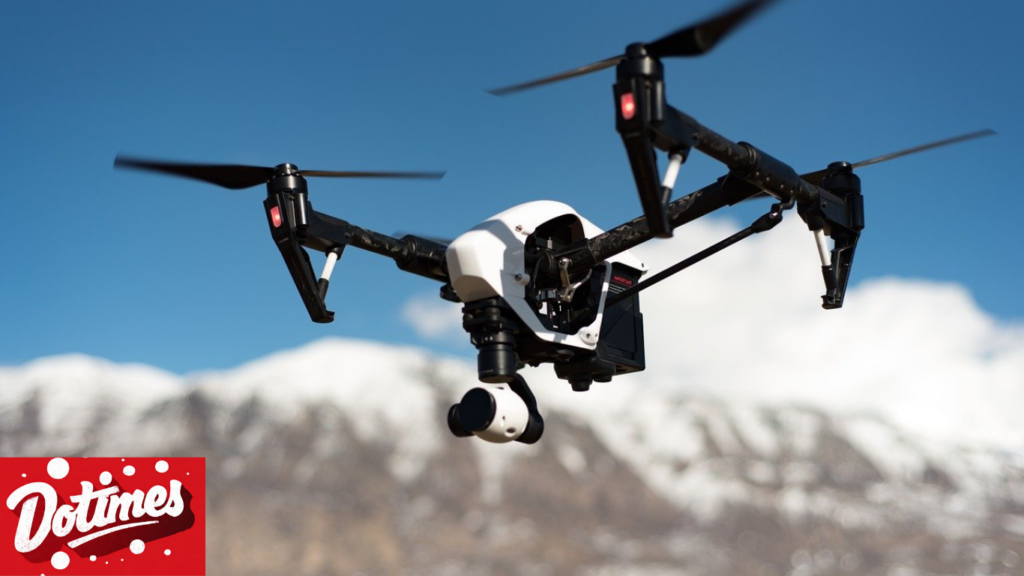

Well, here’s a story that truly proves you don’t need a closed deal to fly high. xCraft, the drone company that walked into Shark Tank with big dreams and a hybrid flying machine, has become one of the most fascinating tech startup success stories in recent memory. From a garage in Coeur d’Alene, Idaho, to a company valued at approximately $34–$35 million, the xCraft net worth journey is nothing short of inspiring.
If you’ve ever wondered how a small aerospace company could capture the attention of every single Shark on national television — and then go on to thrive even without cashing that deal check — you’re in the right place. Let’s break it all down.
xCraft Net Worth at a Glance
Before we dive deep, here’s a quick snapshot of what xCraft looks like financially today:
| Financial Metric | Details |
| Estimated Net Worth (2025) | ~$34–$35 Million |
| Valuation at Shark Tank Appearance (2015) | ~$2.5 Million |
| Deal Offered on Shark Tank | $1.5 Million for 25% Equity |
| Deal Closed? | No |
| Annual Revenue (2021, per SEC filing) | $199,122 |
| Net Loss (2021) | $392,496 |
| Funds Raised via StartEngine (Dec 2021) | $2.2 Million at $34M Valuation |
| PhoneDrone Ethos Kickstarter Amount Raised | ~$170,000 |
| Approximate Annual Sales (Recent Reports) | ~$5 Million |
| Headquarters | Sandpoint/Coeur d’Alene, Idaho, USA |
It’s worth noting that the xCraft net worth figure of $34–$35 million is based largely on their crowdfunding valuation from StartEngine rather than hard profit numbers. Still, the growth from a $2.5 million garage startup to a multi-million dollar enterprise-grade drone company is genuinely impressive.
The Founding Story — A Dream Born in Idaho
Every great company has an origin story, and xCraft’s is one worth telling over a campfire. xCraft was founded by JD Claridge and Charles Manning, and JD Claridge, who serves as the CEO and President, has had a lifelong passion for flight and innovation, having been building and flying drones since childhood. Claridge is also a licensed pilot and a graduate of Embry-Riddle Aeronautical University.
Working from his garage in Coeur d’Alene, Idaho, JD Claridge had a big dream — to create drones that could do things other drones couldn’t. Charles Manning eventually joined him as CEO, bringing business expertise to match Claridge’s technical knowledge.
The problem they were solving? It was a real head-scratcher in the drone world. JD Claridge saw while working in aerospace that drones could hover but weren’t fast, and planes could fly fast but couldn’t hover. He wanted something that could do both, so he created X PlusOne — a drone that lifts off like a helicopter and flies like a plane.
That insight, honestly, was the spark that lit a rocket. The X PlusOne wasn’t just another gadget — it was a technological breakthrough that combined the best of both worlds: quadcopter hovering with fixed-wing speed. No drone on the consumer market had achieved that before.
The Shark Tank Moment That Changed Everything
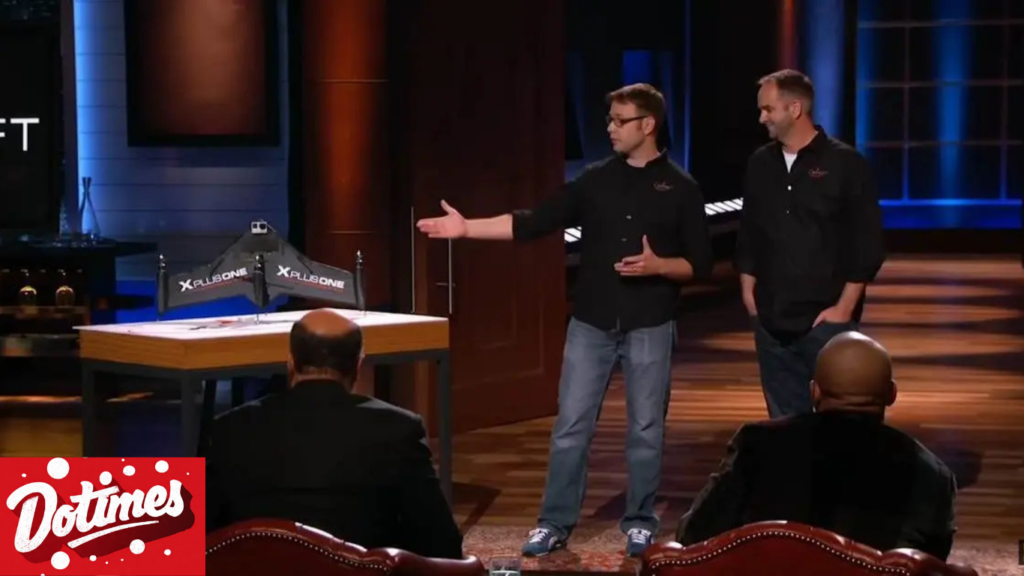
Oh boy, did xCraft make an entrance. JD Claridge and Charles Manning asked for a $500,000 investment in exchange for 20% equity in XCraft — meaning they valued their company at $2.5 million. They explained how their drone could fly at speeds of up to 60 miles per hour and reach heights of 10,000 feet, making it perfect for tracking objects that move fast.
At the time of their Shark Tank appearance, XCraft had achieved $30,000 in pre-sales and was preparing to launch their second product, PhoneDrone Ethos, a collapsible consumer-friendly drone priced at $300 that utilized smartphone GPS, gyroscopes, and cameras to provide an affordable alternative to their premium X PlusOne model, which retailed for $1,899 while costing approximately $400 to manufacture.
Those are some healthy profit margins — we’re talking about a product with a 4x markup, and it still delivered serious value to its customers. That caught the Sharks’ eyes fast.
What happened next was almost unbelievable television. The Sharks fought over the deal and asked JD and Charles to step out of the room. When they returned, the Sharks proposed joining together to invest $1.5 million for 25% equity — a deal that is among the top 10 biggest deals done on the show.
The final deal was $1.5 million for 25% of the company, with all five Sharks involved. The ABC Network broadcast reached millions of viewers, and XCraft became an overnight sensation in the tech startup world.
Why the Deal Didn’t Close — and Why That’s Okay
Here’s where things get interesting. Despite that headline-grabbing deal, it never actually closed. The deal with the Sharks never closed, but Charles and JD continued running the business and raising money through crowdfunding campaigns.
That’s not necessarily a bad thing — it’s actually pretty common with Shark Tank deals. Due diligence after filming sometimes reveals complications, and entrepreneurs often find they can raise money elsewhere on better terms. In xCraft’s case, the exposure alone was worth a fortune.
After the show aired, XCraft saw a big increase in website traffic, sales, and social media exposure. Their website crashed because so many people wanted to learn more about drones. The founders started a Kickstarter campaign right after the episode aired.
And that Kickstarter? It was no slouch. They raised about $170,000 through this campaign. Not bad for a company that didn’t even cash their Shark Tank check!
xCraft Net Worth Growth Timeline
Understanding the xCraft net worth trajectory requires looking at the milestones that shaped it year by year. Here’s how the company evolved:
- 2013–2014: xCraft is founded in Coeur d’Alene, Idaho. Early development of X PlusOne begins.
- 2015: xCraft appears on Shark Tank Season 7 Episode 5. All five Sharks offer a combined $1.5 million deal. Company valuation implied at $6 million post-deal.
- 2015–2016: The Shark Tank deal falls through during due diligence. Kickstarter campaigns raise over $140,000–$170,000.
- 2017: PhoneDrone Ethos Kickstarter raises approximately $170,000. Company begins pivoting toward enterprise clients.
- 2019: xCraft welcomes an aviation industry legend to its board, signaling a growing institutional credibility.
- 2020: Net loss of $1,064,118 recorded — a tough year but one that reflects heavy investment in R&D.
- 2021: Annual revenue of $199,122 with a net loss of $392,496; however, the company raises $2.2 million via StartEngine at a $34 million valuation.
- 2022: xCraft announces a partnership with T-Mobile for Business, focusing on drone telemetry and commercial deployments.
- 2024–2025: xCraft net worth estimated at $34–$35 million; annual sales reportedly around $5 million; defense sector discussions ongoing.
The contrast between the $34 million valuation and $199,122 in revenue does raise eyebrows, but it’s important to understand that tech company valuations are forward-looking. Investors are betting on what xCraft can become — especially in the defense and enterprise drone market.
Products That Power the xCraft Net Worth
![xCraft Panadrone Tethered Drone — Designed for unlimited flight time, used in defense and public safety applications]
A big reason the xCraft net worth keeps climbing is the diversity and innovation in their product lineup. They didn’t stick to just one drone — they kept building, kept iterating, and kept solving new problems.
xCraft has introduced a range of new drone models following its appearance on Shark Tank. These models include the X PlusOne Platinum, Panadrone, and Maverick Cinema, each featuring advanced capabilities to meet the diverse needs of industries. These drones offer cutting-edge solutions, from aerial mapping and surveying to public safety applications.
Here’s a look at their key products:
- X PlusOne / X PlusOne Platinum — The flagship hybrid VTOL drone; can hover and fly at up to 60 mph; retail price around $1,899.
- PhoneDrone Ethos — A consumer-friendly collapsible drone that turns your smartphone into the drone’s brain, GPS, and camera. Priced at $300.
- Panadrone — A tethered drone designed for unlimited flight time, perfect for surveillance, public safety, and persistent aerial monitoring.
- Matrix SE / Matrix RTK — Surveying and mapping drones built for engineers, construction professionals, and geospatial specialists.
- Maverick SE / Maverick Cinema — Versatile drones designed for cinematic aerial footage and field operations.
- Maverick Nano / Shadow — Compact, lightweight solutions targeting sub-250g tactical markets, including defense applications.
Recognizing limited margins in the consumer drone market and regulatory shifts, xCraft repositioned itself toward enterprise and defense drone systems. The website emphasizes industries such as public safety, surveying/mapping, defense, and mining.
This pivot was smart. Selling to government agencies, militaries, and large enterprises means higher contract values, longer relationships, and more predictable revenue — exactly what investors want to see.
How xCraft Makes Money
Understanding the business model behind the xCraft net worth is crucial to appreciating its potential. XCraft makes money in several clever ways. First, there’s the direct sale of drones through their distribution channels. They also earn from drone software and enterprise solutions. Plus, they’ve developed some profitable strategic partnerships. Their business strategy has evolved since their Shark Tank days. Instead of just selling individual drones, they’re focusing more on commercial drone solutions, including custom manufacturing capacity for special orders and ongoing technical support.
Their revenue streams include:
- Direct drone sales — Both consumer and enterprise-grade hardware
- Enterprise solutions contracts — Custom drone systems for construction, mining, and defense
- Software and telemetry services — Drone management platforms for commercial clients
- Government and defense contracts — Potentially high-value, long-term arrangements
- Crowdfunding and investor capital — Reg CF and Reg A+ campaigns through StartEngine
- Licensing technology — Intellectual property from their VTOL innovations
They reportedly generate around $5 million in annual sales and are in discussions with the Department of Defense, which could take their growth even further.
If those DOD discussions materialize into actual contracts — well, that’s a whole different ball game. Defense contracts can be worth hundreds of millions over time.
xCraft’s Strategic Partnerships and Industry Recognition
You can’t talk about the xCraft net worth without giving credit to the strategic relationships that helped build it. xCraft publicly announced a partnership with T-Mobile for Business in July 2022, framing the collaboration as leveraging network infrastructure and drone telemetry to support large-scale commercial deployments.
That T-Mobile partnership is a big deal — quite literally. Connecting drone operations to 5G infrastructure opens doors to remote operation, real-time data streaming, and autonomous fleet management at a scale that was impossible just a few years ago.
XCraft’s influence shows at major events like CES (Consumer Electronics Show) and the InterDrone Conference. The Association for Unmanned Vehicle Systems International often highlights their innovations in flight technology. Compared to competitors like DJI and Parrot SA, XCraft stands out in specialized markets. While they might not match DJI’s production costs or scale, they win on innovation and specialized features. DroneLife and other industry watchers regularly praise their unique approach to solving complex drone challenges.
Winning on innovation — not volume — is actually a smarter play for a company of xCraft’s size. They’re not trying to out-manufacture DJI. They’re out-thinking them.
The Drone Industry Context — Why the Future Looks Bright
The market backdrop for the xCraft net worth story is incredibly optimistic. The commercial drone market is forecasted to reach $35.6 billion by 2026. That’s a staggering number, and it tells you just how much room there is for companies like xCraft to grow.
Revenue growth keeps climbing, especially as more industries start using drones. The drone market analysis shows this trend will likely continue, especially with new applications in drone delivery and military drones.
Consider the industries that are adopting drone technology at an accelerating pace:
- Construction and Infrastructure — Site surveying, progress monitoring, inspection
- Agriculture — Crop monitoring, precision spraying, yield analysis
- Public Safety — Police surveillance, search and rescue, disaster response
- Energy Sector — Pipeline inspection, wind turbine maintenance, solar farm analysis
- Defense and Military — Reconnaissance, tactical surveillance, logistics
- Media and Entertainment — Cinematography, live event coverage, sports broadcasting
- Mining — Volume calculations, site safety monitoring, environmental compliance
xCraft is already active in most of these verticals, which means they’re perfectly positioned to ride the wave as drone adoption accelerates. Honestly, they’re not just keeping up with the industry — in several niches, they’re actually leading it.
Challenges and Honest Realities
Now, let’s keep it real. Not everything about the xCraft net worth story is sunshine and rainbows. There are legitimate challenges that investors and observers should understand.
Despite the impressive valuation, xCraft is struggling to make a profit. According to SEC filings, xCraft’s annual revenue for 2021 was $199,122 and they made a net loss of $392,496. In 2020, they posted a net loss of $1,064,118.
That gap between a $34 million valuation and a few hundred thousand dollars in annual revenue is significant. It reflects the reality that xCraft is still very much in growth mode — investing heavily in R&D, product development, and market expansion before the profits start flowing.
Despite facing some challenges in scaling production, xCraft remains active and committed to advancing drone technology.
Scaling production is genuinely hard for hardware companies. Unlike software startups that can scale by writing more code, drone manufacturers have to deal with supply chains, manufacturing tolerances, regulatory certifications, and quality control at every step. It’s capital-intensive, time-consuming work.
But here’s the thing — they’re still here. They’re still building. They’re still growing. And in the notoriously difficult world of hardware startups, that’s actually a remarkable achievement.
What Analysts and Industry Watchers Are Saying
The broader picture for xCraft’s valuation is cautiously optimistic, and here’s why analysts tend to look past the current revenue numbers:
- The Reg A+ crowdfunding raise at a $34 million valuation represents real investor confidence in the company’s future
- Their intellectual property in VTOL technology is genuinely valuable and difficult to replicate
- Defense sector interest could unlock massive contract revenue that would completely transform their financial profile
- The T-Mobile partnership signals credibility with major enterprise players
- Their product diversification across seven-plus distinct drone platforms reduces risk
- The global push toward drone delivery and autonomous systems creates enormous tailwinds
Market capitalization has grown significantly since their early days. Investment returns have been strong, making those early investors very happy. Their business development plans keep attracting new funding too.
Conclusion
So, what’s the bottom line on the xCraft net worth story Yes, the gap between their $34–$35 million valuation and their current revenue is a challenge worth watching. But every major drone company, every major tech company, went through periods where their vision ran ahead of their balance sheet. The ones that survive — and thrive — are the ones that keep innovating, keep building relationships, and keep finding new problems to solve.
xCraft has done all of that. Their xCraft net worth journey from a $2.5 million garage startup to a $35 million enterprise drone company is a testament to grit, innovation, and the power of thinking differently in a crowded market.
The drone industry is set to be worth tens of billions of dollars over the next few years. xCraft is already at the table. And if those Department of Defense discussions turn into contracts? Well, let’s just say we might be writing a very different net worth article in the near future.
Keep your eyes on the sky — and on xCraft.
FAQs
What is xCraft’s net worth in 2025?
The xCraft net worth in 2025 is estimated at approximately $34 to $35 million, based on their most recent crowdfunding valuation from a Reg A+ capital raise on the StartEngine platform. This figure reflects investor sentiment and the company’s growth potential rather than current profitability.
Did xCraft get a deal on Shark Tank?
Yes — and it was a historic one. xCraft received offers from all five Sharks on Season 7 for a combined investment of $1.5 million in exchange for 25% equity, valuing the company at $6 million. However, the deal did not close after the show aired due to post-filming due diligence complications.
How does xCraft make money?
xCraft generates revenue through direct drone sales to consumers and enterprises, enterprise solution contracts for sectors like defense, mining, and construction, drone software and telemetry services, government contracts, and crowdfunding capital raises through platforms like Kickstarter and StartEngine.
Who founded xCraft?
xCraft was co-founded by JD Claridge, an aerospace and electrical engineer and licensed pilot who graduated from Embry-Riddle Aeronautical University, and Charles Manning, a serial entrepreneur. The company was founded in 2013–2014 in Coeur d’Alene, Idaho.
Is xCraft still in business in 2025?
Absolutely. xCraft continues to operate and innovate as of 2025, now positioning itself as “America’s Drone Company.” They have expanded into enterprise and defense markets, partnered with T-Mobile for Business, and are reportedly in discussions with the Department of Defense for potential contracts. Their product lineup now includes over eight commercial and enterprise-grade drone systems.