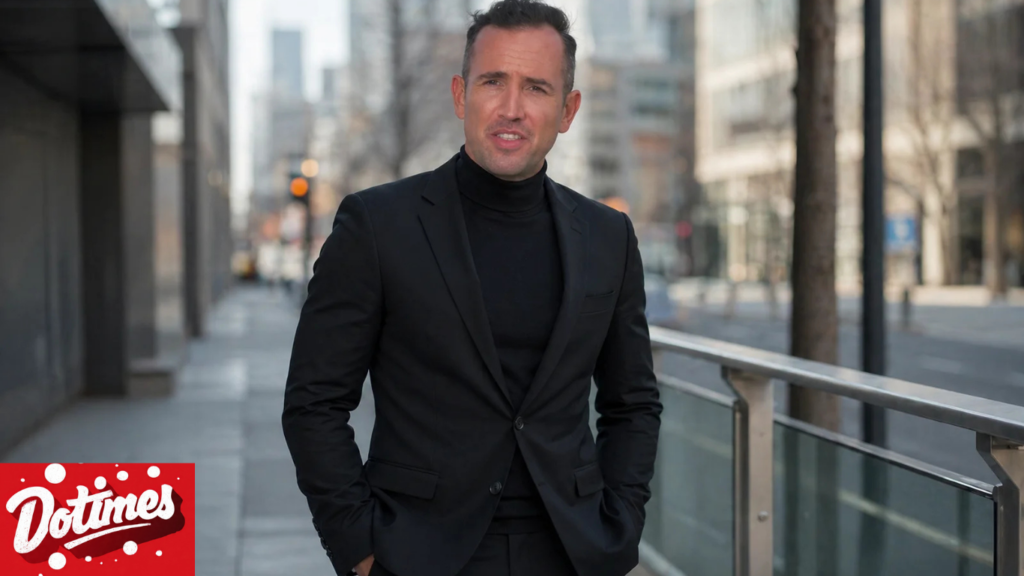

Hugo Bachega is one of the most respected and recognisable names in international journalism today. From the war-torn streets of Kyiv to the politically charged corridors of the Middle East, this BBC correspondent has never shied away from telling the stories that matter most. Well, if you’ve ever watched a BBC News broadcast and found yourself gripped by a report from a conflict zone — there’s a fair chance Hugo Bachega was the voice behind it.
His career is, without a doubt, a testament to what dedication, courage, and a genuine love for truth-telling can achieve. In a world flooded with noise, Hugo Bachega cuts through with clarity, compassion, and a remarkable ability to humanise even the most complex global crises. Let’s take a closer look at the man, the journalist, and the extraordinary career that has made him a household name across the globe.
Who Is Hugo Bachega? A Brief Overview
Hugo Bachega is a British-Brazilian journalist who currently serves as the BBC’s Middle East correspondent, based in Beirut, Lebanon. He started his career as an intern for the Reuters news agency in São Paulo before becoming a full-time political correspondent. Over the years, he has evolved into one of the BBC’s most trusted voices — covering stories that span continents, cultures, and crises.
Originally from Brazil, Bachega began his career at Reuters before transitioning to the BBC. His dedication to frontline reporting has earned him recognition in the media industry. What sets Hugo apart from many of his peers isn’t just his willingness to be on the ground in dangerous places — it’s his ability to make viewers feel the weight of what’s happening, even from thousands of miles away.
His distinctive reporting style, combined with his notable Brazilian accent, has made him a trusted voice in global news coverage. And honestly, that accent has become something of a signature — warm, authoritative, and unmistakably his own.
Early Life and Background: From São Paulo to the World Stage
Every great journalist has a starting point, and for Hugo Bachega, that starting point was Brazil. Hugo Bachega was born in São Paulo, Brazil, between 1983 and 1993. His exact date of birth remains undisclosed, but he is estimated to be between 30 and 40 years old.
Hugo Bachega was born in London, England, but he has Brazilian roots. This makes him British-Brazilian, a blend of two culturally rich and diverse nations. Growing up with this dual heritage gave him a unique lens through which to view the world — one that would later prove invaluable in his reporting career.
Bachega studied media at the Pontifical Catholic University of São Paulo. It was here, within the lecture halls and newsrooms of one of Latin America’s most prestigious universities, that his passion for journalism took root. He didn’t just study the craft — he lived it. And that foundation would serve him extraordinarily well in the years ahead.
The Early Career: Reuters and the Road to the BBC
You’ve got to start somewhere — and for Hugo Bachega, that somewhere was Reuters. He started his career as an intern at Reuters in São Paulo, Brazil, and eventually became a full-time political correspondent.
This early experience at one of the world’s most prestigious news agencies was nothing short of formative. Working in a high-pressure, fast-paced environment taught him the fundamentals of accurate, timely, and responsible reporting. It sharpened his instincts, broadened his perspective, and lit the fire that would drive him to pursue some of the world’s most challenging assignments.
His versatility and passion for reporting led to his appointment as the BBC’s Middle East Correspondent, based in Beirut, Lebanon. The transition from Reuters to the BBC marked a turning point — not just professionally, but personally. Hugo was stepping onto a much bigger stage, and the world was watching.
Covering Egypt: Revolution, Turmoil, and the Tahrir Square Moment
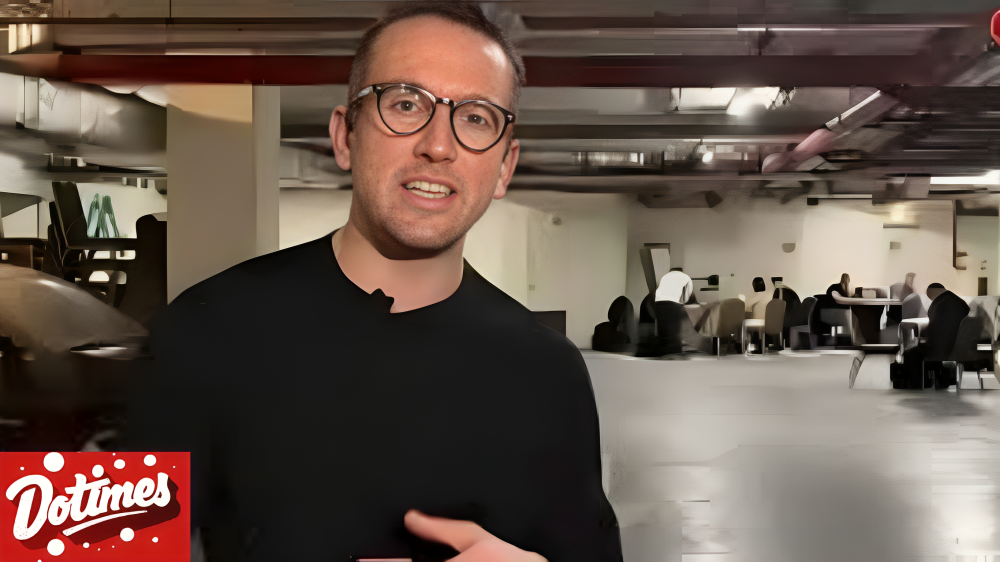
One of the most defining chapters of Hugo Bachega’s early career at the BBC unfolded in Egypt — a country on the brink of dramatic political transformation. Previously based in Cairo, Egypt, he covered the protests and unrest in Egypt, the 2014 Constitutional referendum, the anniversary of Egypt’s revolution and the crackdown on the opposition.
But it was one particular moment that truly cemented his reputation as a fearless journalist. In 2013, Bachega was in Tahrir Square when the Egyptian army announced the removal of President Mohamed Morsi. Also that year he covered the violent dispersal of a pro-Morsi sit-in and the Syrian refugee crisis among other stories.
To be in Tahrir Square at that pivotal moment — witnessing history as it unfolded in real time — is the kind of experience that defines a journalist’s career. Hugo didn’t just report on the Egyptian revolution; he was inside it, observing, documenting, and bringing those stories to BBC audiences around the world. That takes both courage and commitment, and Hugo Bachega has both in spades.
The Rio Olympics: Bringing Brazil to the World
In 2016, Hugo Bachega had the rare opportunity to cover a major international event in his own home country. In 2016, he was part of the team covering the Rio Olympics for BBC News, providing daily, live coverage of events.
This assignment was special — not just because of the excitement of the Olympic Games, but because of the deeper socio-political context surrounding it. As a Brazilian-rooted journalist, his coverage of the Rio Olympics was highly insightful. He focused on both the sporting events and the socio-political impact of the Olympics on Brazil.
It was a masterclass in layered journalism. While the world cheered for medals and records, Hugo was also drawing attention to the complex realities facing Brazilian society — the inequality, the politics, and the people who lived in the shadow of the Olympic spotlight. That’s what great journalism looks like.
Ukraine: Reporting from the Front Lines of War
If there’s one assignment that brought Hugo Bachega into the global spotlight in an extraordinary way, it was his reporting from Ukraine. His reporting from Ukraine at the start of the Russian invasion offered firsthand accounts that brought the global community closer to understanding the true scale of the conflict.
But nothing quite captures the raw reality of frontline journalism like what happened on a fateful day in October 2022. The BBC’s journalist in Kyiv, Hugo Bachega, was delivering a news report when several explosions happened in the centre of Ukraine’s capital city. Just over an hour later, after heading to shelter with his camera crew, the BBC re-established contact with Hugo.
That moment went viral. Viewers across the world watched in real time as Hugo instinctively ducked — and then, with remarkable calm and professionalism, continued to report. His composure during such moments has earned him respect from colleagues and viewers alike.
And it didn’t stop there. On New Year’s Day 2023, he reported from a shelter during a Russian attack on Kyiv, once again showing his dedication to bringing stories from the front lines. Hugo wasn’t just reporting about the war — he was in it, experiencing the same fear, uncertainty, and chaos as the civilians he was covering.
The Middle East Correspondent: Beirut and Beyond
In November 2023, Hugo Bachega took on what is arguably the most challenging and prestigious role of his career. He was very excited to be moving to Beirut as the BBC’s new Middle East correspondent. He had lived in the region for the first time when he was 20 and had been coming back ever since.
This role positioned him at the heart of one of the world’s most dynamic and newsworthy regions, where he covers diverse topics including political conflicts, humanitarian crises, and social issues.
His reporting from this region has been nothing short of extraordinary. As the BBC Correspondent in Gaza, he provided in-depth coverage of the ongoing Israeli-Palestinian conflict, humanising the consequences of war with interviews from affected individuals. His ability to sit down with ordinary people — families who’ve lost everything, communities torn apart by conflict — and tell their stories with dignity and compassion is what makes his reporting stand out.
One of the most talked-about moments from his Middle East tenure came in October 2023. Hamas spokesman Ghazi Hamad abruptly interrupted Hugo’s interview and walked away after Hugo repeatedly asked him how he could justify the killing of hundreds of civilians, including many women and children, in the 7 October attacks in Israel. That interview — broadcast widely and viewed millions of times — showcased Hugo’s fearless approach to holding powerful figures accountable.
Language Skills and Cultural Intelligence: A Journalist’s Secret Weapon
One of the things that truly sets Hugo Bachega apart is his remarkable linguistic ability.
Here’s a quick snapshot of his linguistic capabilities:
| Language | Proficiency Level | How It Helps His Reporting |
| Portuguese | Native / Fluent | Connects with Brazilian and Lusophone sources |
| English | Fluent | Primary language for BBC broadcasting |
| Spanish | Proficient | Valuable across Latin American and Spanish-speaking stories |
| Arabic | Conversational | Crucial for Middle East field reporting |
This multilingual ability isn’t just impressive on a résumé — it’s a genuine superpower in the field. Hugo knows this, and he uses it brilliantly.
Awards and Recognition: A Career Celebrated by the Industry
Hard work never goes unnoticed — especially in journalism. And Hugo Bachega‘s dedication has earned him recognition from some of the most respected bodies in international media.
He earned the BBC Journalism Award for Best International Reporter in recognition of his remarkable coverage of numerous global events. In addition, the Association of International Broadcasting gave him the Best News Correspondent award.
Key highlights of his professional recognition include:
- BBC Journalism Award — Best International Reporter
- AIB Award (Association of International Broadcasting) — Best News Correspondent
- Widespread praise for Ukraine conflict reporting
- Recognition for fearless interviewing in politically sensitive environments
- Featured appearances in BBC documentaries and special programmes
His work has helped shed light on critical global issues, making him one of the most respected journalists in international media. And that, ultimately, is the greatest award a journalist can receive — knowing that their work made a difference.
Personal Life: The Man Behind the Microphone
Away from the cameras and conflict zones, Hugo Bachega keeps a relatively private personal life — and honestly, who can blame him? When your day job involves ducking from explosions and confronting government spokespersons, a little privacy at home seems more than fair.
Hugo Bachega is married.
This approach allows him to focus on journalism without the distractions that can come with public scrutiny of personal relationships.
What we do know is that Hugo has a deep and long-standing connection to the Middle East — a connection that goes beyond professional duty. Hugo Bachega has maintained a personal connection to the Middle East region since the age of 20, which has deepened his understanding of the area’s complexities. That kind of personal investment in a region adds a layer of depth to his reporting that no amount of briefing documents can replicate.
Hugo Bachega’s Reporting Style and Impact on Modern Journalism
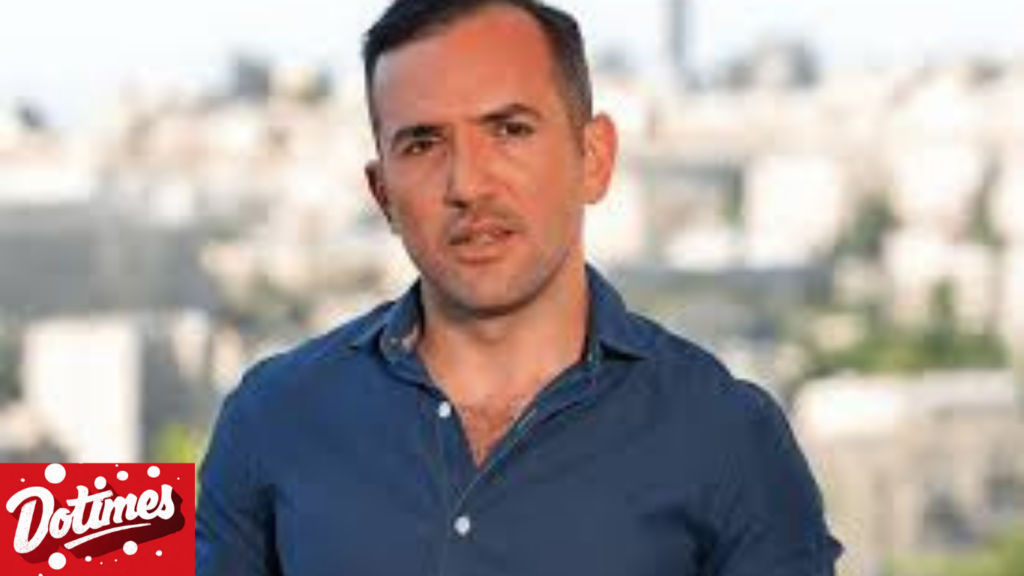
What truly distinguishes Hugo Bachega in a crowded field of talented journalists is his style. There’s a quality to his reporting that feels both authoritative and deeply human — a balance that’s harder to achieve than it sounds.
His ability to connect with viewers and provide context to complex issues has strengthened his influence in the journalism industry.
Here are some of the defining characteristics of his reporting approach:
- Fearlessness in the field — Hugo doesn’t report from a safe distance. He gets as close to the story as humanly possible.
- Emotional intelligence — He knows when to push for answers and when to listen with compassion.
- Accountability journalism — As seen in his Hamas interview, he doesn’t let powerful figures off the hook.
- Contextual depth — His knowledge of history, culture, and language allows him to add layers of meaning that many reporters miss.
- Calm under pressure — Whether bombs are falling or tensions are rising, Hugo remains composed and professional.
Hugo Bachega’s career as a BBC correspondent has been marked by his exceptional ability to report from the world’s most dangerous and politically charged regions. Through his journalism, he has brought the human cost of conflict into sharp focus, earning recognition as a leading voice in global media.
In many ways, Hugo Bachega represents what modern journalism should aspire to be — brave, honest, multilingual, and rooted in a genuine belief that the public deserves to know the truth.
Conclusion
In an age of misinformation, clickbait, and 24-hour news cycles that often sacrifice depth for speed, Hugo Bachega stands as a shining example of what journalism can and should be. From his humble beginnings as an intern at Reuters in São Paulo to his current role as the BBC’s Middle East correspondent in Beirut, his journey is nothing short of inspiring.
He’s been on the ground in Egypt during a revolution, in Ukraine as bombs fell around him, and in the heart of the Middle East as one of the region’s most complex conflicts unfolded. Through it all, Hugo Bachega has remained committed to one thing: telling the truth.
Whether it’s his Ukraine coverage or his in-depth reporting from Gaza, Hugo Bachega continues to set the standard for what it means to be a journalist in the 21st century.
For aspiring journalists, media students, and news consumers alike, Hugo Bachega is a name worth knowing, a career worth studying, and a standard worth striving for. His story reminds us that great journalism isn’t just a job — it’s a calling. And Hugo Bachega has answered that call with everything he’s got.
FAQs
Who is Hugo Bachega?
Hugo Bachega is a British-Brazilian journalist and BBC News correspondent, currently serving as the BBC’s Middle East correspondent based in Beirut, Lebanon. He is known for his frontline reporting from conflict zones including Ukraine, Egypt, and Gaza.
Where is Hugo Bachega from?
Hugo Bachega has Brazilian roots and studied at the Pontifical Catholic University of São Paulo. He holds both British and Brazilian nationality, making him a British-Brazilian journalist.
What language does Hugo Bachega speak?
Hugo Bachega is proficient in Portuguese, English, and Spanish, and also speaks conversational Arabic — a skill that significantly enhances his reporting from the Middle East.
Has Hugo Bachega won any awards?
Yes. Hugo Bachega has received the BBC Journalism Award for Best International Reporter and the AIB (Association of International Broadcasting) Award for Best News Correspondent, among other forms of professional recognition.
Is Hugo Bachega married?
Yes, Hugo Bachega is married. However, he keeps his personal life private and has not publicly disclosed details about his spouse or family.