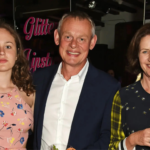

Well, if you’ve ever come across the name Julian Ozanne, you might’ve first heard it tied to a celebrity marriage — but trust me, there’s so much more to this remarkable man than a Hollywood headline. Julian Ozanne is a distinguished British journalist, film producer, and social activist known for his unique approach to storytelling and his deep engagement with international affairs. He has worn many hats throughout his career — photojournalist, foreign correspondent, documentary filmmaker, investment advisor, environmental entrepreneur, and social activist.
What makes Julian Ozanne genuinely fascinating is his ability to move seamlessly between worlds that rarely intersect: the intense, fact-driven universe of international journalism, the creative landscape of documentary filmmaking, and the complex, ever-shifting terrain of African business and environmental sustainability. He’s not your typical public figure. He doesn’t seek the spotlight. Yet his contributions to media, culture, and environmental conservation speak volumes. This article takes a close, comprehensive look at the life, career, and legacy of Julian Ozanne — a man who, quite frankly, deserves far more recognition than he typically receives.
Early Life and Cultural Roots of Julian Ozanne
Julian Ozanne is a Kenyan-born British journalist and documentary filmmaker. Born in Kenya in 1964 and raised in Lesotho, he studied at the London School of Economics before beginning his career. His early years were anything but ordinary. He was raised in the palace of King Moshoeshoe II of Lesotho — an experience that must have given him a remarkable window into African royalty, governance, and tradition. That kind of upbringing doesn’t just shape a child; it moulds a worldview.
Julian Ozanne grew up with a cross-cultural background that informed his later work. His early life exposed him to the complex social and political realities of Africa, inspiring his future endeavors in journalism and filmmaking. Growing up in a multicultural environment, Ozanne developed a keen interest in media and storytelling, laying the foundation for his career as a journalist and filmmaker.
After finishing his early schooling, Julian Ozanne set his sights on Britain for higher education. He attended the prestigious London School of Economics (LSE), where he studied economics and international relations. This academic foundation became central to his future career, as he frequently tackled global issues such as governance, human rights, and socio-economic reform in his journalistic work. Graduating in 1986, he was well-equipped to engage with the world’s most complex political and financial challenges.
Julian Ozanne’s Career in Journalism: Telling the Stories That Mattered
After graduating from LSE, Julian Ozanne didn’t waste a single moment. He jumped headfirst into the world of journalism. From 1987 to 1997, he worked as a foreign correspondent with the Financial Times. There, he was the Middle East correspondent and the Africa bureau chief.
His reporting wasn’t just informative — it was courageous. His diverse career spans journalism, documentary filmmaking, and television production. Beginning as a journalist for notable publications such as The Guardian and The Observer, Ozanne covered topics ranging from politics to cultural issues. He also worked for BBC Newsnight as a producer.
Julian Ozanne quickly earned a reputation as one of the most outspoken voices in international journalism. Julian is considered one of the most courageous critics of the Zimbabwean government. At a time when such criticism required considerable personal bravery, he refused to back down.
Here’s a snapshot of his journalism career:
| Period | Role | Organisation |
| 1987–1997 | Foreign Correspondent / Africa Bureau Chief | Financial Times |
| Various | Journalist / Writer | The Guardian & The Observer |
| Various | Producer | BBC Newsnight |
| 1994–1999 | Investment Risk Advisor | US & European Investment Banks |
As a journalist, Julian Ozanne distinguished himself by focusing on underreported regions and complex international issues. His analytical style combined economic insight with a humanitarian lens, offering readers a comprehensive understanding of geopolitical developments. Through his insightful reporting, Julian Ozanne built credibility as a voice for balanced and evidence-based journalism.
Julian Ozanne as a Documentary Filmmaker: Bringing Stories to the Screen
Now, here’s where things get really interesting. After nearly a decade in print journalism, Julian Ozanne made a bold and creatively exciting transition into documentary filmmaking. And honestly? It was a move that made perfect sense.
Julian Ozanne is a producer and director, known for Here to Where (2002), Giorgio Armani: A Man for All Seasons (2000), and This Is Not an Exit: The Fictional World of Bret Easton Ellis (1999).
His notable documentary productions include:
- “Here to Where” (2002) — a documentary reflecting his deep engagement with social and political themes.
- “Giorgio Armani: A Man for All Seasons” (2000) — a portrait of one of fashion’s most legendary figures, demonstrating Julian’s versatility as a storyteller.
- “This Is Not an Exit: The Fictional World of Bret Easton Ellis” (1999) — an insightful exploration of the controversial American author’s literary universe.
His filmmaking style reflects a journalist’s commitment to accuracy combined with an artist’s eye for storytelling. This dual approach allows Ozanne to create documentaries that not only inform but also provoke thought and discussion among viewers.
His visual storytelling has been praised for combining journalistic integrity with compelling cinematic techniques, making his documentaries both informative and emotionally engaging.
Investment Banking and Advisory Roles: Julian Ozanne’s Business Acumen
It’d be a mistake to think of Julian Ozanne as simply a journalist or filmmaker. He’s also got a keen business mind. In between his tenure at the Financial Times, from 1994 to 1999, Julian served as an advisor to many US and European investment banks. He majorly focused on the business and political risks in the African market.
Beyond journalism and filmmaking, Julian Ozanne has established himself in advisory and executive roles, particularly within the realm of sustainable business and investment. His early training in economics equipped him to understand market dynamics, financial risk, and global investment trends. Ozanne has served as a strategic advisor to investment banks and global organisations, including participation in forums such as the World Economic Forum. His expertise spans financial analysis, policy advising, and investment strategy, particularly in emerging markets in Africa.
His participation in high-level global forums like the World Economic Forum speaks volumes about the trust and authority he had built up over the years. Julian, with his deep knowledge of the African continent, was perfectly positioned to bridge the gap between Western financial institutions and African investment opportunities.
Leading the New Forests Company: Julian Ozanne’s Green Revolution
Perhaps the most impactful chapter of Julian Ozanne‘s career has been his role at the New Forests Company (NFC). The New Forests Company (NFC) is a UK-based forestry company that began operating in Uganda in 2004 and swiftly expanded to Mozambique, Tanzania and Rwanda. In the process, according to CEO Julian Ozanne, it has created 2,500 jobs and invested more than US$85 million in the development of plantations. This includes US$3 million spent on development projects for communities surrounding NFC’s plantations and timber value-adding sites.
In June 2018, Julian Ozanne was publicly described as the Founder and CEO of NFC during a discussion about the challenges of financing greenfield forestry in Africa. He highlighted his view that African forestry offered a major long-term opportunity to help address climate change.
Under his leadership, NFC achieved remarkable milestones:
- Created over 2,500 jobs for local communities across Africa
- Invested more than US$85 million in plantation development
- Spent approximately US$3 million on community development projects
- Planted millions of trees annually, contributing to large-scale reforestation
- Established 11,000 hectares of plantations from scratch in Uganda alone
“Having planted millions of trees annually for the past six years and led the creation of a modern Ugandan forestry industry,” Ozanne expressed regret at having to suspend operations, describing the impact on workers and communities. His transparency about the challenges facing NFC — rather than glossing over them — reflects the kind of honest leadership that earns genuine respect.
Julian Ozanne as a Social Activist and Critic of Governance
Julian Ozanne has never shied away from speaking truth to power — and that’s one of the things that makes him such an admirable figure throughout his career. From his early days in Kenya to his achievements in journalism, filmmaking, and philanthropy, Ozanne demonstrates that meaningful impact does not require constant public exposure. His dedication to social causes, professional excellence, and personal integrity serves as a model for future generations.
As a social activist, Julian has engaged deeply with issues including:
- Human rights and the protection of vulnerable communities in Africa
- Environmental justice and the rights of local populations near large-scale forestry operations
- Political accountability in African governments — particularly his outspoken criticism of Zimbabwe’s government
- Sustainable development and its role in poverty alleviation
- Climate change advocacy through green investment in African forestry
His philanthropic work in Zimbabwe focused on helping communities affected by economic crises and political unrest. His close engagement with the Zimbabwe government allowed him to promote ethical forestry and environmental reform policies.
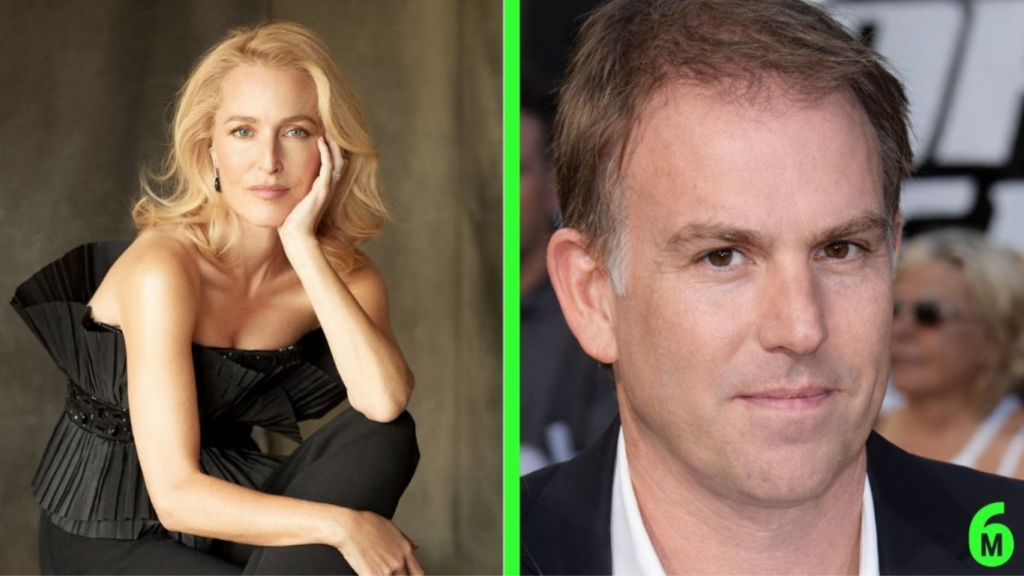
Personal Life: Julian Ozanne and Gillian Anderson
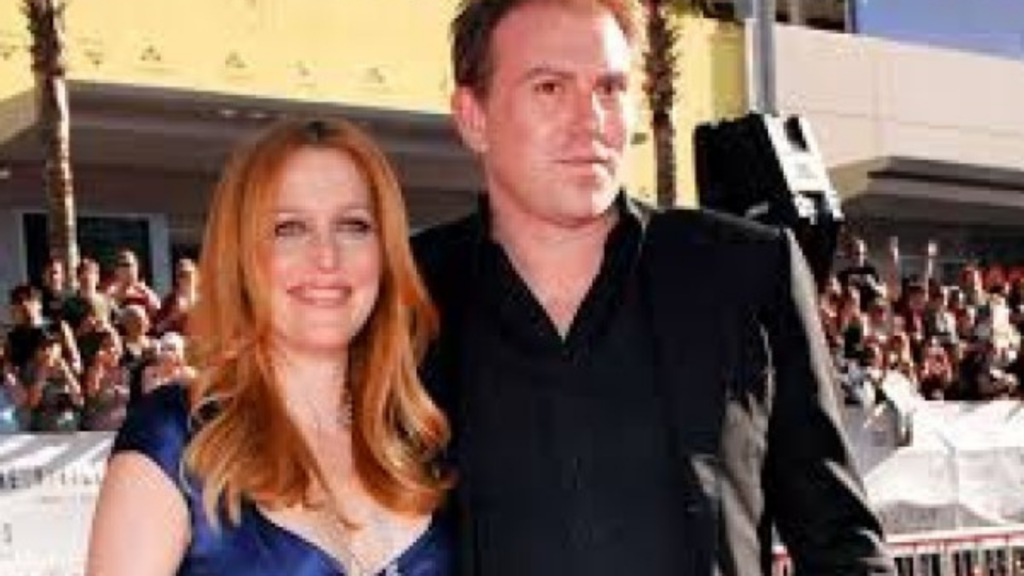
No article about Julian Ozanne would be complete without mentioning his marriage to Gillian Anderson, the internationally acclaimed actress best known for her iconic role as Dana Scully in The X-Files. Ozanne and Anderson married on 29 December 2004 in Kenya. Their wedding took place on Shella Island, near Lamu, in a small private ceremony.
Anderson’s 10-year-old daughter, Piper, served as her bridesmaid. The union attracted significant media attention, given Gillian Anderson’s global celebrity status. At that time, the marriage attracted attention because Anderson was already internationally famous.
However, the marriage ended in 2007, and both parties moved forward with their lives. Julian, true to his private nature, has kept very little of his personal life in the public eye. Ozanne is not a typical celebrity figure. He has kept a relatively private public image, especially compared with the fame surrounding his former wife. His background is more serious and international, shaped by education, journalism, business and social causes.
What We Can Learn from Julian Ozanne’s Life and Career
At the end of the day, Julian Ozanne’s story is a deeply inspiring one — and there are real, practical lessons that anyone can draw from it. For aspiring journalists and documentary filmmakers, Ozanne’s career offers valuable lessons. His ability to combine rigorous research with creative storytelling demonstrates the importance of versatility and intellectual curiosity. Emerging professionals can learn from his dedication to accuracy, ethical reporting, and the thoughtful presentation of complex topics.
Here are some of the most powerful takeaways from his life:
- Follow your curiosity without hesitation: Julian moved from economics to journalism to filmmaking to environmental entrepreneurship, and each transition enriched the next chapter.
- Use your platform with purpose: Whether as a journalist, filmmaker, or business leader, Julian consistently used his influence to advocate for those without a voice.
- Think globally, act locally: His work in African forestry is a perfect example of taking big ideas — climate change, sustainable development — and turning them into tangible, community-level action.
- Stay private, stay purposeful: Julian has largely avoided the celebrity spotlight, choosing to let his work define him — a genuinely refreshing quality.
- Be courageous enough to speak truth: Whether criticising governments or acknowledging his company’s challenges, Julian Ozanne has always chosen honesty over comfort.
Conclusion
In conclusion, Julian Ozanne is far more than a footnote in someone else’s story. He is a story unto himself — a rich, complex, and deeply meaningful one. From his extraordinary childhood in the royal palaces of Lesotho to his decade of courageous international journalism, from his creative work as a documentary filmmaker to his groundbreaking environmental entrepreneurship in Uganda and beyond, Julian Ozanne has lived a life of genuine purpose and remarkable achievement.
His understated style and private lifestyle reinforce the perception of a professional focused on substance over spectacle. Julian Ozanne’s life story exemplifies how one can achieve global influence while prioritizing personal values and privacy.
He’s the kind of person who doesn’t just talk about making the world better — he actually rolls up his sleeves and does it. His contributions span multiple fields, including journalism, filmmaking, business advisory, and environmental sustainability. While he remains relatively private, his work has left an indelible mark on the industries in which he operates.
As we look to the future — one that desperately needs more people with his combination of intelligence, courage, and compassion — the life of Julian Ozanne stands as a shining, inspiring example of what’s possible when talent truly meets purpose.
FAQs
Who is Julian Ozanne?
Julian Ozanne is a Kenyan-born British journalist, documentary filmmaker, social activist, and environmental entrepreneur. He served as a foreign correspondent and Africa Bureau Chief for the Financial Times, produced several notable documentaries, and led the New Forests Company as its Founder and CEO, pioneering sustainable forestry across Africa.
What documentaries has Julian Ozanne made?
Julian Ozanne has produced and directed several documentaries, including Here to Where (2002), Giorgio Armani: A Man for All Seasons (2000), and This Is Not an Exit: The Fictional World of Bret Easton Ellis (1999). His work blends journalistic accuracy with creative, cinematic storytelling.
Was Julian Ozanne married to Gillian Anderson?
Yes, Julian Ozanne was married to actress Gillian Anderson, best known for playing Dana Scully in The X-Files. They married on 29 December 2004 in a private ceremony on Shella Island, near Lamu, Kenya, and divorced in 2007.
What is Julian Ozanne’s role in African forestry?
Julian Ozanne served as the Founder and CEO of the New Forests Company (NFC), a UK-based sustainable forestry firm operating across Uganda, Mozambique, Tanzania, and Rwanda. Under his leadership, NFC created over 2,500 jobs, invested more than US$85 million in plantations, and planted millions of trees annually.
Where did Julian Ozanne grow up and study?
Julian Ozanne was born in Kenya and spent part of his childhood in the palace of King Moshoeshoe II of Lesotho. He later moved to the UK for higher education, graduating with a degree in economics from the prestigious London School of Economics in 1986 before launching his illustrious career in journalism and beyond.