

If you’ve ever felt that some love stories are simply too powerful for this world to contain, then Annabel Lee is the poem you were born to read. Written by one of America’s most celebrated and mysterious literary figures, Edgar Allan Poe, annabel lee is a masterpiece that captures love in its most pure, aching, and eternal form. From the very first line, the poem pulls you in like a tide — gentle at first, then impossible to escape. It’s haunting, it’s beautiful, and honestly, it hits you right in the heart.
First published in 1849, just two days after Poe’s own death, Annabel Lee stands as his final completed poem — and many believe it was his most personal. Whether you’re studying it for school, revisiting it as a literature lover, or simply stumbling upon it for the first time, this article will walk you through everything you need to know: its background, themes, structure, symbolism, and the reasons it continues to move readers more than 175 years later.
Let’s dive in.
Who Wrote Annabel Lee and Why Does It Matter?
Edgar Allan Poe — the man behind The Raven, The Tell-Tale Heart, and The Fall of the House of Usher — wrote annabel lee sometime in the late 1840s. Poe was no stranger to darkness or to loss. His mother died when he was just two years old. His beloved wife, Virginia Clemm, whom he married when she was only thirteen, passed away in 1847 after a long battle with tuberculosis. The grief Poe carried was immense, real, and raw.
It’s widely believed — though not definitively proven — that Annabel Lee was written in memory of Virginia. The poem describes a young love so perfect and so pure that even the angels in heaven were jealous of it. That’s not mere poetic exaggeration; for Poe, it likely felt like the truth.
What makes this poem matter beyond Poe’s personal story is its universal resonance. Anyone who has loved deeply and lost — or feared losing — can find themselves in these verses. That’s the magic of annabel lee: it belongs to everyone.
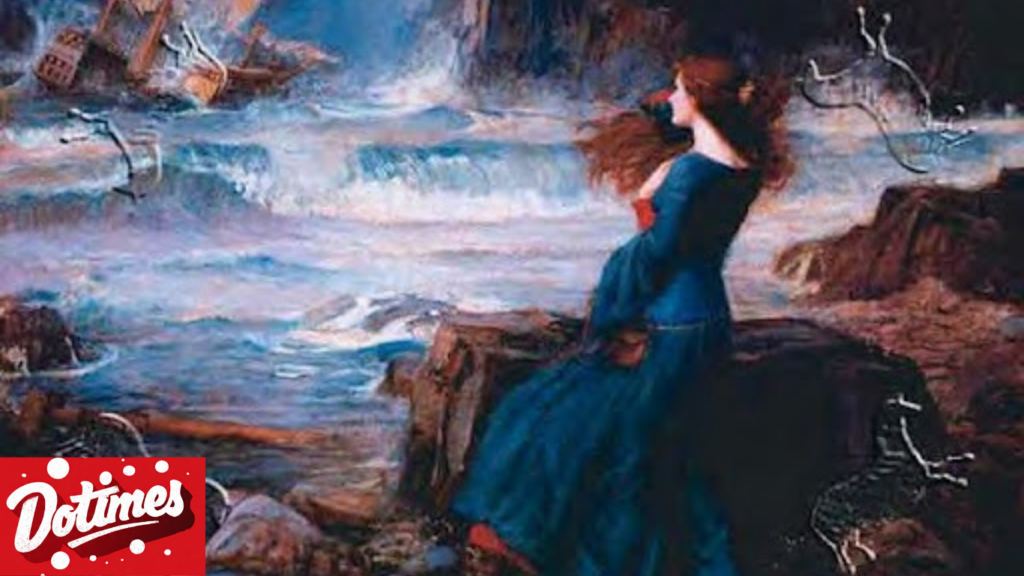
The Full Story Behind the Poem
Annabel Lee is set in a “kingdom by the sea” — a dreamlike, fairy-tale-like place that feels both specific and timeless. The narrator is deeply in love with a young woman named Annabel Lee, and their love, he tells us, was no ordinary romance. It was the kind of love that “the winged seraphs of heaven coveted.”
Then, without warning, a cold wind comes out of the clouds and kills Annabel Lee. Her “highborn kinsmen” — her family — take her away and lock her in a sepulchre (a tomb) by the sea. But here’s the thing: the narrator refuses to let death be the end. He insists that their love is so strong, so eternal, that not even death or angels or demons can truly separate them.
He ends the poem by saying that every night he lies down beside her tomb, under the moon and stars, as close to her as he can possibly be.
It’s deeply sad. But it’s also deeply beautiful — and that’s the point.
A Closer Look at the Structure and Style of Annabel Lee
One of the most fascinating things about annabel lee is how Poe uses structure to reinforce emotion. The poem has six stanzas of varying lengths, written in a style known as a ballad — a form traditionally used for songs and stories of love and loss.
Here’s a quick structural breakdown:
| Feature | Detail |
| Form | Ballad |
| Number of Stanzas | 6 |
| Rhyme Scheme | Irregular but musical (ABABCB pattern) |
| Meter | Anapestic and iambic — flowing and song-like |
| Tone | Melancholic, passionate, defiant |
| Point of View | First-person narrator (the grieving lover) |
| Setting | A kingdom by the sea |
The repetition of phrases like “kingdom by the sea,” “Annabel Lee,” and “my darling, my darling, my life and my bride” creates a hypnotic, almost incantatory effect — as if the narrator is casting a spell or singing a lullaby to a ghost. It’s deliberate, it’s powerful, and it absolutely works.
Themes That Make Annabel Lee Unforgettable
There are several themes woven through annabel lee that give it such lasting emotional power. Let’s break them down:
Love That Defies Death
This is the poem’s central and most powerful theme. The narrator’s love for Annabel Lee doesn’t end when she dies. In fact, it seems to grow stronger. He doesn’t move on; he doesn’t heal in the conventional sense. He simply loves her — endlessly, obsessively, and completely. Poe seems to be suggesting that true love is, by its very nature, eternal.
Jealousy of the Divine
One of the poem’s most striking claims is that the angels themselves were jealous of the love between the narrator and Annabel Lee. This is a bold, almost blasphemous idea — placing human love above divine purity. Yet it doesn’t feel arrogant. It feels like the sincere belief of a man who has known something rare and extraordinary.
Grief and Memory
He goes to her tomb every night. He keeps her memory alive, not as a sad ritual, but as an act of devotion. This resonates deeply with anyone who has lost someone they love.
The Power of Youth and Innocence
Both the narrator and Annabel Lee are described as children when they fall in love — “I was a child and she was a child.” This emphasis on youthful, uncorrupted love gives the poem an added layer of innocence and purity. Their love wasn’t complicated by the world; it was simply, beautifully real.
Nature as Both Witness and Threat
The sea, the wind, the moon, and the stars all play important roles in the poem. Nature is a witness to their love — but it’s also the force that, through a cold wind, takes Annabel Lee away. By the end of the poem, however, the narrator has reclaimed nature. He lies beside her grave “in her sepulchre there by the sea,” and the moon and stars become symbols of connection rather than loss.
The Symbolism Hidden in Every Line
Poe was a master of layered meaning, and annabel lee is no exception. Let’s unpack some of the poem’s most significant symbols:
- The Kingdom by the Sea — This represents a world apart from ordinary life, a fairy-tale realm where pure love is possible. The sea itself is a classic symbol of eternity, mystery, and the unconscious mind.
- The Sepulchre — Annabel Lee’s tomb represents both physical death and the barrier between the living and the dead. Yet the narrator refuses to see it as a true barrier. To him, it’s simply where she lives now.
- The Angels and Demons — These figures represent the forces of the universe conspiring against human love — yet the narrator insists they are powerless. It’s a defiant, almost rebellious declaration.
- The Cold Wind — A sudden, destructive force that represents the randomness and cruelty of death. It comes without warning and takes everything.
- The Moon and Stars — By the final stanza, these celestial bodies become symbols of Annabel Lee’s spirit, watching over the narrator as he keeps his nightly vigil by her tomb.
Why Annabel Lee Still Speaks to Readers Today
Here’s the honest truth: annabel lee endures not because it’s technically perfect or academically important (though it is both), but because it feels true. Poe tapped into something deeply human — the refusal to let love die, even when the person we love is gone.
In a world where we’re often told to “move on” or “let go,” Poe’s narrator stands firm. He won’t let the world — or death itself — tell him that his love is over. That’s a feeling many of us understand, even if we’ve never lost someone in quite the same way.
The poem also benefits from Poe’s remarkable ear for language. Read it aloud and you’ll immediately notice how musical it is — how the words seem to roll and sway like waves on a shoreline. That’s not accidental. Poe believed that poetry should achieve its effects through sound as much as meaning, and Annabel Lee is a perfect demonstration of that philosophy.
Annabel Lee in Popular Culture
Over the decades, annabel lee has inspired an extraordinary range of artistic works. It’s one of those poems that seems to slip out of the page and into the world.
Here are just a few examples of its cultural reach:
- Film and Television: The poem has appeared in countless films, TV episodes, and adaptations of Poe’s work, often used to underscore themes of obsessive love or tragic loss.
- Visual Art: Painters and illustrators have been creating images inspired by the poem for over a century — beautiful, gothic, and deeply romantic.
- Literature: Many authors have referenced or reimagined Annabel Lee in their own novels, short stories, and poems. Vladimir Nabokov’s controversial novel Lolita famously echoes the poem’s narrator and its imagery.
- Education: The poem is studied in high schools and universities worldwide, making it one of the most widely read poems in the English language.
The Mystery of Who Annabel Lee Really Was
Ah, and now we get to the good stuff — the mystery! Who was Annabel Lee, really? Was she based on a real person? Poe scholars have debated this for generations, and honestly, it’s one of the most delightful literary debates out there.
The most popular theory, as mentioned earlier, is that Annabel Lee represents Virginia Clemm, Poe’s young wife. Virginia was artistic, gentle, and deeply loved by Poe. Her slow death from tuberculosis haunted him for years, and the themes of Annabel Lee align remarkably well with his documented grief.
However, other candidates have been proposed over the years:
- Frances Sargent Osgood — A poet and close friend of Poe’s who some believe he loved romantically.
- Mary Devereux — A woman Poe reportedly loved in Baltimore in his early adult years.
Some scholars argue that Annabel Lee is simply a composite — a poetic ideal rather than a specific real person. And perhaps that’s fitting. Perhaps she belongs to all of us, in the way that the best literary characters always do.

What Students and Readers Can Learn From Annabel Lee
If you’re approaching annabel lee for the first time — especially as a student — there’s a wealth of things to take away from this poem beyond its plot. Here’s a handy list:
- The power of tone: Notice how Poe maintains a tone that is sad yet defiant throughout. It never collapses into pure despair.
- The use of repetition: Repetition in poetry isn’t laziness — it’s a tool. Study how Poe uses it to create rhythm, emphasis, and emotional impact.
- Ballad tradition: Annabel Lee connects to a long tradition of narrative ballads. Knowing that context makes the poem richer.
- Biographical reading: While we shouldn’t reduce a poem to its author’s biography, knowing Poe’s life adds meaningful layers to this poem.
- Close reading skills: Every word in Annabel Lee is chosen carefully. Practice asking: Why this word? Why here?
- Emotional intelligence: Great literature teaches empathy. Annabel Lee asks us to sit with grief — not to fix it, but to understand it.
A Poem That Lives Forever — Just Like Its Love
In the end, annabel lee achieves exactly what Poe set out to do: it proves that love — real, deep, unshakeable love — cannot be killed. Not by time, not by angels, not by death itself. The poem is a monument to devotion, a testament to the belief that what we truly love never fully leaves us.
It’s no wonder that more than 175 years after it was first published, readers are still lying awake at night with these lines running through their heads. Poe gave us something rare in Annabel Lee — a poem that doesn’t just describe love; it is love, crystallized on the page, immortal and unafraid.
Whether you’re reading it for the first time or the fiftieth, annabel lee will always have something new to give you. And that, perhaps more than anything, is the mark of a truly great poem.
Conclusion
From its opening lines in a kingdom by the sea to its haunting final image of a lover lying beside a tomb under the stars, annabel lee remains one of the most emotionally powerful poems in the English language. Edgar Allan Poe wrote it as a tribute to love — the kind that outlasts life itself — and in doing so, he created something that has outlasted his own life by nearly two centuries.
The poem’s themes of eternal love, divine jealousy, grief, and defiance continue to resonate because they speak to something universal in the human experience. Whether you’re a student, a literature enthusiast, or simply someone who has loved and lost, annabel lee speaks directly to you.
So the next time you find yourself by the sea, under a bright and shining moon, think of Annabel Lee — and remember that some love stories never truly end.
FAQs
What is the main theme of Annabel Lee?
The main theme of annabel lee is the enduring, immortal nature of true love. Poe explores how love can transcend death, defy the heavens, and survive every force the universe throws at it. The narrator’s devotion to Annabel Lee does not weaken after her death — it deepens, becoming almost supernatural in its intensity.
Who was Annabel Lee based on?
The most widely accepted belief is that Annabel Lee was inspired by Virginia Clemm, Poe’s beloved wife who died of tuberculosis in 1847. However, other candidates — including Sarah Elmira Royster Shelton and Frances Sargent Osgood — have also been proposed by scholars. Some argue she’s a poetic ideal rather than a specific real person.
What does the “kingdom by the sea” mean in Annabel Lee?
The “kingdom by the sea” is a symbolic setting representing an idealized, fairy-tale world where pure, untainted love can exist. The sea symbolizes eternity and mystery, while the “kingdom” gives the love story an almost mythological quality — placing it outside of ordinary time and space.
Why is Annabel Lee considered one of Poe’s best poems?
Annabel lee is considered among Poe’s finest work because of its perfect blend of musicality, emotional depth, and symbolic richness. Its ballad structure, the repetition of key phrases, and the defiant yet melancholic tone all work together to create a poem that is both technically masterful and profoundly moving. It encapsulates Poe’s belief that the death of a beautiful woman is the most poetical topic in the world — and he proved his own point magnificently.