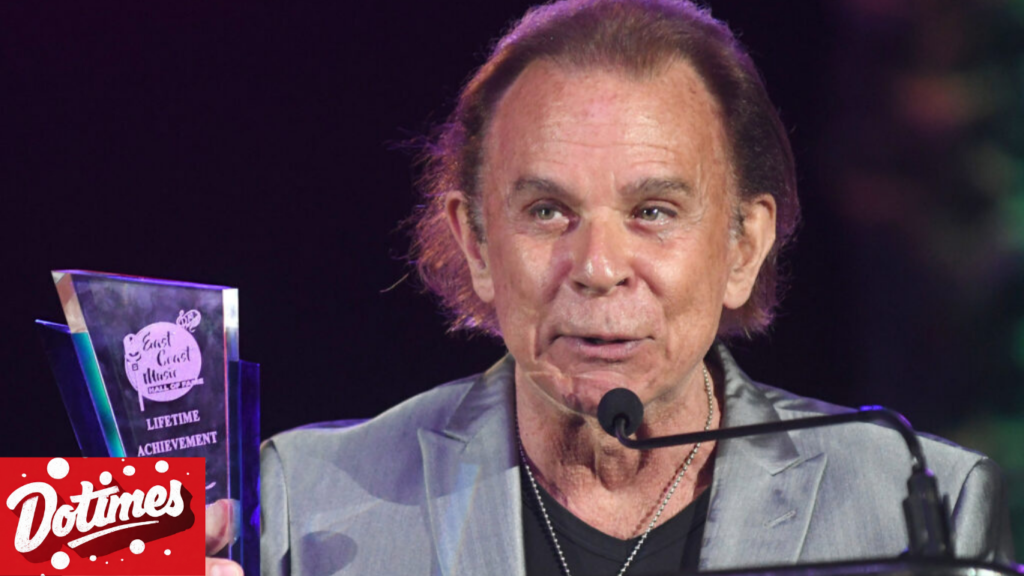

Lou Christie Net Worth has become a topic of genuine fascination for music lovers and pop culture enthusiasts alike — and honestly, it’s not hard to see why. When a man born Lugee Alfredo Giovanni Sacco in a small Pennsylvania town rises to become one of the most recognizable voices of the 1960s, people naturally want to know how that golden falsetto translated into financial success. Lou Christie’s story isn’t just about chart-toppers and sold-out concerts; it’s a masterclass in longevity, reinvention, and building a career that keeps on giving, even decades after the spotlight first found him.
Who Was Lou Christie? A Star Born in Pennsylvania
Born Lugee Alfredo Giovanni Sacco on February 19, 1943, in Glenwillard, Pennsylvania, Lou Christie was an American pop and soft rock singer-songwriter widely known for his hits in the 1960s. Growing up on a modest farm outside Pittsburgh, young Lugee was a long way from the glamour of the music industry — yet there was always something extraordinary bubbling beneath the surface.
Christie skyrocketed to fame in the early 1960s with million-selling hits like “The Gypsy Cried,” “Two Faces Have I,” and the iconic #1 single “Lightnin’ Strikes.” His voice was unlike anything radio audiences had heard before — a soaring, almost supernatural falsetto that could crack hearts wide open with a single note.
He recorded unsuccessfully with groups like The Classics and Lugee and the Lions before he was signed by Roulette Records and recorded his debut single, “The Gypsy Cried.” It was only after the record was released that he discovered an executive had renamed him “Lou Christie” — something, by his own admission, that irritated him for two decades. But that name became synonymous with a sound that defined a generation, and the rest, as they say, is history.
The Rise to Fame: Chart Success That Built a Fortune
You simply can’t talk about Lou Christie Net Worth without diving headfirst into the hits that made him a household name. Christie’s commercial trajectory was nothing short of remarkable — and every chart position added another layer to the financial foundation he’d be building upon for the rest of his life.
Lou Christie earned fame with several 1960s pop hits. “The Gypsy Cried” reached No. 24 in March 1963, blending doo-wop drama and his unique falsetto. “Two Faces Have I” climbed to No. 6 that June and sold over a million copies. Then, in February 1966, he topped the charts with “Lightnin’ Strikes,” earning gold status in the U.S., Canada, and elsewhere.
“Rhapsody in the Rain” sparked controversy yet still reached No. 16 on Billboard. Later, “I’m Gonna Make You Mine” hit No. 2 in the U.K. in 1969. The controversy surrounding “Rhapsody in the Rain” — with many radio stations refusing to play it due to its suggestive lyrics — ironically boosted its appeal among teenagers, turning a potential setback into an unexpected marketing win.
He had three singles in the top 10 singles in the U.S. across a period of six years in the ’60s, and his biggest success, “Lightnin’ Strikes,” hit number 1 on the Billboard Hot 100 in 1966.
Here’s a quick look at his major hits and their chart performance:
| Song Title | Year | U.S. Chart Position | Certification |
| The Gypsy Cried | 1963 | No. 24 | — |
| Two Faces Have I | 1963 | No. 6 | Gold (1M+ copies) |
| Lightnin’ Strikes | 1966 | No. 1 | Gold (U.S., Canada) |
| Rhapsody in the Rain | 1966 | No. 16 | — |
| I’m Gonna Make You Mine | 1969 | No. 10 (U.S.) / No. 2 (U.K.) | — |
Lou Christie Net Worth: What the Numbers Actually Say
Alright, let’s cut to the chase — what was Lou Christie Net Worth at the time of his passing?
Lou Christie was a popular American singer and songwriter who had an estimated net worth of $5 million before he died on June 18, 2025. His net worth was contributed by music sales and royalties, live performances, session work, and television appearances.
Estimates place Christie’s net worth between $5–8 million, secured by royalties from his rich catalog, performance earnings, radio hosting, and oldies touring.
It’s worth noting that financial estimates for artists of Christie’s era can vary widely across different sources. Some more speculative reports place the figure considerably higher, but the most credible and consistent assessments from music industry observers and biography sources point to the $5–8 million range as the most reliable estimate — a sum that reflects a full career of genuine achievement rather than hype.

Music Royalties: The Engine Behind Lou Christie’s Wealth
If there’s one financial engine that kept Lou Christie’s income humming along for six decades, it was music royalties. Think about it — every time “Lightnin’ Strikes” played on a retro radio station, got licensed for a television commercial, or streamed on a digital platform, Christie was earning. That’s the beauty of owning and maintaining rights to timeless music.
Just “Lightnin’ Strikes” alone would go on to earn a substantial amount of royalties, especially from repeated usage in nostalgia advertisements, streaming series, and TV shows.
His key royalty income streams included:
- Streaming platforms — Songs like “Lightnin’ Strikes” and “Two Faces Have I” continue to rack up millions of plays on Spotify, Apple Music, and YouTube, generating consistent performance royalties.
- Sync licensing — Film and television placements brought in substantial fees whenever his music was used in soundtracks or commercials.
- Radio airplay — Oldies stations across America frequently featured his catalog, translating into steady royalty payments.
- Physical and digital sales — Compilation albums and greatest hits packages kept his music commercially available and profitable.
His songs were included in the soundtrack of films like Barcelona, A Home of Our Own, and Burnzy’s Last Call. Each placement represented not just cultural recognition but a direct financial return on the artistic work he’d done decades prior.
Live Performances and the Oldies Circuit: Keeping the Cash Flowing
Now, here’s something that many people don’t fully appreciate — Lou Christie didn’t sit back and coast on his royalties. He stayed active on stage for an extraordinarily long time, and that dedication to performing was a crucial pillar of his financial stability.
Although his mainstream chart presence diminished after the ’60s, he maintained a consistent and beloved presence on the oldies concert circuit for decades. According to multiple sources, he was performing well into the 2020s, which demonstrates his enduring popularity among his dedicated fan base.
Christie remained musically active into his seventies, releasing new singles — Love Goes On Forever, Luv Attack, When You Were Young — and hosting shows on SiriusXM’s 1960s channel. In 2022, he joined the nostalgic Golden Boys supergroup.
The oldies circuit, while often underestimated, is a genuinely lucrative space for veteran artists. Fans of the 1960s and 1970s era are loyal, enthusiastic, and willing to pay premium prices for a night of nostalgia. Christie understood this dynamic intuitively. Rather than viewing his status as a “classic” artist as a limitation, he leaned into it with enthusiasm — and his bank account reflected that smart thinking.
Key live performance revenue sources included:
- Oldies festival appearances across the United States and internationally
- Theatre and cabaret shows in intimate venues that commanded higher ticket prices
- Corporate and private events where veteran artists are booked for reunions and nostalgia-themed gatherings
- SiriusXM radio hosting, which provided both income and kept him visible to new audiences
The Songwriting Partnership That Created Timeless Art
One of the most fascinating and underreported aspects of Lou Christie’s career — and, by extension, his net worth — is his long-running creative partnership with Twyla Herbert. This collaboration was about as unconventional as it gets, and yet it produced some of the most memorable pop songwriting of its era.
At the age of 15, he partnered creatively with Twyla Herbert, a quirky but classically trained woman. Christie’s emotional intuition and Twyla’s musical discipline produced hundreds of songs, including the majority of his hits.
Herbert, who was significantly older than Christie, brought classical training and compositional discipline to his raw, emotional vocal instincts. Together, they created a body of work that would generate royalties for the rest of Christie’s life. Co-writing credits mean co-ownership of publishing rights — and publishing rights in the music industry are, put simply, one of the most valuable assets a musician can hold. Every cover version, every sync license, every streaming play generates revenue for the songwriters. Christie’s co-writing legacy with Herbert ensured that the financial rewards extended far beyond his performing years.
Personal Life: The Stable Foundation Behind the Career
Behind every long, successful career, there’s usually a stable personal life providing balance — and Lou Christie was no exception. His personal story is one of genuine warmth and commitment.
Christie married UK beauty Francesca Winfield in 1971 in London, and they remained together until his passing. They had two children. The couple lived in New York’s Hell’s Kitchen and, later, in his native Pittsburgh. Known as “Lightnin’ Lou,” he credited his marriage and stable home life for fueling his enduring creative journey.
Sadly, their son died in a motorcycle accident in 2014 at age 46. Francesca remained a steadfast partner and confirmed Lou’s passing to The Hollywood Reporter.
That kind of personal stability — a lifelong marriage, a consistent home base, a grounded sense of identity — almost certainly contributed to Christie’s ability to manage his finances wisely and maintain a productive career well into his eighties. Without the financial and personal disruptions that derailed many of his contemporaries, Christie was able to stay focused on what he did best.
Lou Christie Compared to His Contemporaries: How Did He Stack Up Financially?
It’s natural to wonder how Lou Christie Net Worth compares to fellow artists of his era. While Christie was never a billionaire pop mogul, his financial standing was solid and respectable among the class of 1960s pop stars.
| Artist | Estimated Net Worth | Primary Income Sources |
| Lou Christie | $5–8 million | Royalties, touring, radio hosting |
| Frankie Valli | ~$80 million | Royalties, Broadway, touring |
| Paul Anka | ~$60 million | Songwriting, touring, investments |
| Bobby Darin (estate) | ~$10 million | Royalties, film work |
| Gary Lewis | ~$5 million | Touring, nostalgia circuit |
Christie sits comfortably in the middle of this group. He didn’t reach the extraordinary wealth of artists like Frankie Valli — whose songwriting catalog and Broadway success (Jersey Boys) supercharged his finances — but he surpassed many of his peers through disciplined career management and consistent performance activity.
Legacy, Final Years, and the Financial Picture at the End
Lou died at the age of 82 in June 2025, following an illustrious songwriting and music career. Christie died on Tuesday, June 17 at their home in Pittsburgh following a brief illness.
His family confirmed his death in a statement which read, “It is with deep sorrow that we share the passing of our beloved brother, Lou Christie, who left us after a brief illness. He was cherished not only by his family and close friends, but also by countless fans whose lives he touched with his kindness and generosity, artistic and musical talent, humor and spirit.”
The tributes that poured in from across the music world spoke volumes about a man whose legacy was measured in far more than dollars. His friend Jeremy Driesen captured something essential when he noted Christie’s “honesty, humanity, kindness and loyalty” — and joked, affectionately, that Christie had “taught me showmanship, professionalism, self-respect — and how to shave.”
With a career spanning six decades, he was a beloved oldies circuit performer, radio host, and revered cultural figure. His legacy is marked by chart-topping success, artistic reinvention, and enduring influence.
The financial picture at the end of his life reflected a man who had worked consistently, spent wisely, and built something durable. An estimated net worth of $5–8 million, sustained by decades of royalties, touring, and media work, is a genuinely impressive achievement for an artist who never became a mainstream megastar in his later decades. It’s proof that longevity and consistency can build real wealth — perhaps more reliably than a single flash of massive success.
What We Can Learn from Lou Christie’s Financial Journey
Lou Christie’s story offers some genuinely inspiring takeaways for anyone interested in the intersection of creativity and financial sustainability. Here are the key lessons his career teaches us:
- Royalties are forever. Investing in songwriting and publishing rights creates income streams that outlast any single career phase. Christie’s co-writing credits continued paying dividends for six decades.
- Stay active. Rather than retiring quietly, Christie kept performing, recording, and broadcasting well into his eighties. That ongoing activity generated income and kept his brand alive.
- Diversify your income. Christie combined touring with radio hosting, session work, and television appearances — a smart diversification strategy that protected him from any single source drying up.
- Stability matters. A stable personal life and smart spending habits allowed Christie to accumulate and protect wealth rather than squander it.
- Embrace your era. Instead of chasing trends that didn’t suit him, Christie owned his identity as a 1960s icon and found a loyal, paying audience in that space.
Conclusion
Lou Christie’s net worth was estimated between $5 million and $8 million at the time of his death on June 18, 2025. This wealth was accumulated through music royalties, live performances, radio hosting on SiriusXM, and decades of activity on the oldies touring circuit.
FAQs
What was Lou Christie’s most financially successful song?
“Lightnin’ Strikes,” which hit number 1 on the Billboard Hot 100 in February 1966, was almost certainly his most financially valuable song. It earned Gold status in multiple countries and continued generating royalties through streaming, sync licensing, and nostalgia media placements for decades after its release.
Did Lou Christie write his own songs?
Yes. Lou Christie co-wrote the majority of his hit songs in partnership with Twyla Herbert, a classically trained musician. This songwriting credit gave him co-ownership of the publishing rights to his catalog, which became a major long-term source of income through royalties.
How long did Lou Christie remain active in the music industry?
Lou Christie remained musically active from the early 1960s right through to the 2020s — a remarkable career span of over six decades. He continued performing on the oldies circuit, released new music, and hosted a show on SiriusXM’s 1960s channel. In 2022, he joined the nostalgic Golden Boys supergroup.
When and how did Lou Christie die?
Lou Christie passed away on June 18, 2025, at the age of 82 at his home in Pittsburgh, Pennsylvania, following a brief illness. His wife, Francesca, confirmed the news to The Hollywood Reporter. His death prompted an outpouring of tributes from fans and fellow musicians across the world, celebrating a career that had touched millions of lives.